
Astau
Sherbakul Historical and Local History Museum • Astau. Fund of the Azret Sultan National Historical and Cultural Museum-Reserve
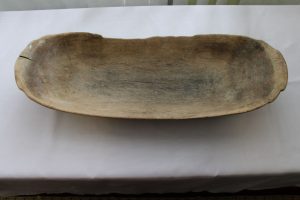
Astau is a wooden dish for meat dishes: beshbarmak – elongated, pilaf – rounded, meat or sheep’s head – flat. Astau was made from hard woods – birch, oak, pear, etc. The fibrous structure of wooden astau made from komel (the lower part of a birch tree) retains the heat of food for a long time. It was believed that these types of wood did not affect the taste of meat. Old museum specimens of astau are characterised by their laconic form and lack of decoration, and they are distinguished by their harmonious proportions. The craftsmen preserved the natural elongated shape of the tree trunk, deepened its interior space to create the desired volume, smoothed the cuts of the tree and left narrow sides in the elongated part. The ends of the astau were made wider for convenient serving of meat to the dastarkhan. Folk tales note the sacred properties of the astau, its ability to protect people from negative forces and life’s misfortunes. Unique examples of astau for collective spiritual meals are kept in the fund of the Azret Sultan Museum-Reserve. Made of birch wood, they have elongated shapes (240x40x33 cm; 225x40x25 cm). Astau were used for the dish khalim, which was distributed after Friday prayers.