
Ceramic dish. 18th–19th centuries. Kultobe settlement
18th–19th centuries. Kultobe settlement. Photo by E.S. Kazizova
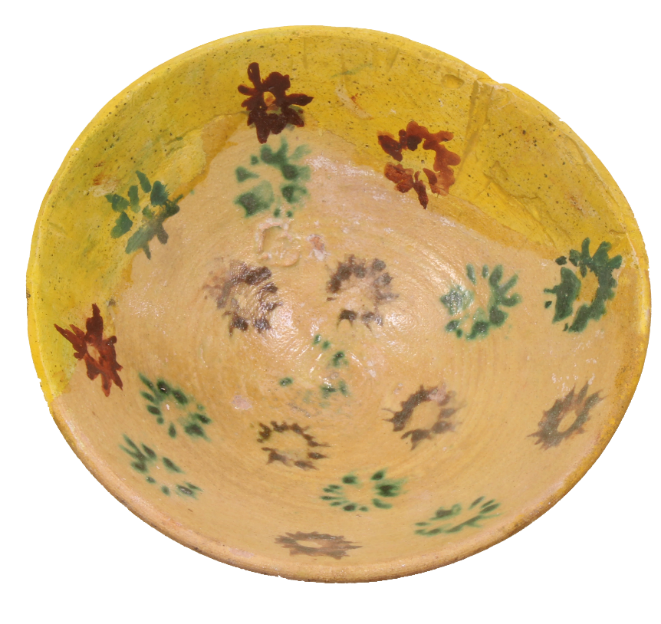
The inner surface of the piece features a consistent decorative motif in the form of small ‘star-shaped’ flowers, executed in a red-brown and green colour scheme. This ornament is referred to as ‘basma’. Researchers emphasise that this element, unlike many other ornamental motifs, retained its popularity in Central Asian ceramics right up to the present day.This colour scheme was a characteristic decorative technique of the craftsmen of that period and was likely linked to the traditional beliefs of the peoples of Central Asia regarding the symbolism of colour. Yellow-toned tableware was perceived as ‘impure’ and susceptible to the evil eye, whereas green, on the contrary, was associated with purity and protective properties.At the same time, the bowl in question differs significantly in its ornamental design from the canonical stylistic conventions of the region’s pottery.