
JugsLocation: ShymkentSource: KAZINFORM
Kendybay Karabdallov
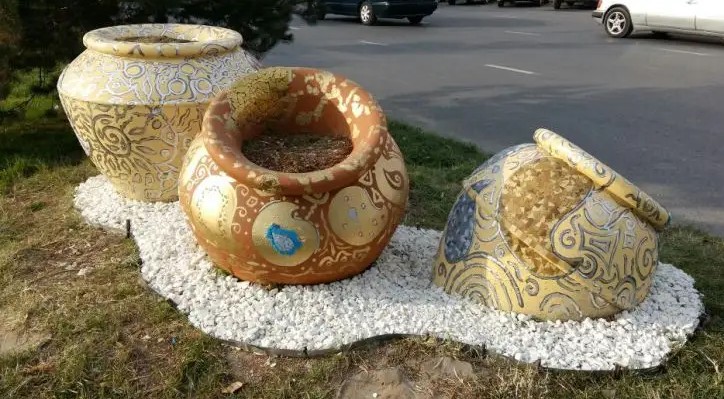
The installation is a spatial composition comprising three stylised ceramic vessels of varying sizes and shapes. The arrangement of the ensemble is based on the principle of rhythmic variation in the volumes and positions of the objects within the space. The sequential variation in the height, proportions and angle of inclination of the vessels creates a dynamic structure, devoid of symmetry and staticness.The tall vessel, positioned vertically, serves as the compositional focal point and sets the overall scale of the work. The central object is characterised by more squat proportions and a stable form, emphasising the materiality and functional nature of traditional ceramics. The third vessel, positioned at an angle, creates a diagonal vector of movement and reinforces the sense of temporal changeability. Thanks to this technique, the composition is perceived as a fragment of an archaeological landscape, where cultural artefacts are uncovered during excavations or gradually emerge from the cultural layer.The most important expressive element of the work is the ornamental decoration covering the surface of the vessels. The ornaments are executed in the style of traditional decorative and applied art, giving the composition the character of a cultural marker and a repository of historical memory.