
Zhekpe-Zhek, 2011. Wool, acrylic, silk, hand-woven. Source: https://nomadmgz.kz
Doszhanov Bauyrzhan
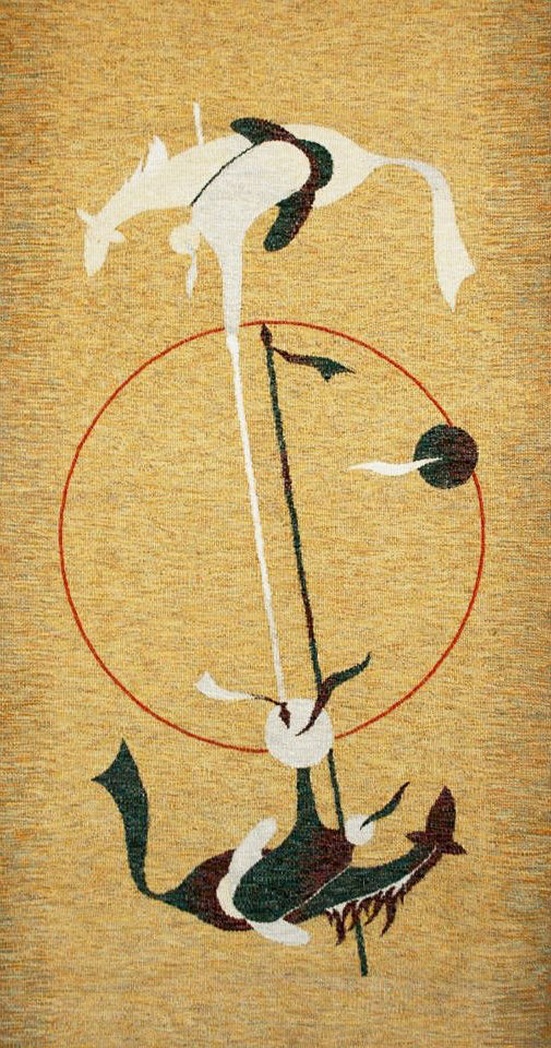
The work ‘Zhekpe-Zhek’ represents a symbolic exploration of the ancient tradition of martial arts, interpreted through the language of abstract sculpture and decorative minimalism. The artist eschews narrative specificity and realistic detail, focusing instead on the archetypal nature of the confrontation. As a result, the scene of the duel is transformed into a philosophical model of struggle as a universal condition of the world and human existence.The composition is organised around a pronounced vertical axis, which becomes the structural and semantic centre of the work. This line, reminiscent of a spear or a taut string, connects the upper and lower parts of the space, forming a tense system of equilibrium. From a semiotic perspective, the vertical line serves as a symbol of the connection between opposing principles — the heavenly and the earthly, the spiritual and the material. The upper, light-coloured figure of the horseman is perceived as a symbol of the sublime, the spiritual and the almost metaphysical, whilst the dark silhouette in the lower part of the composition is associated with the weight of the earthly world and material reality.