
Decorative panel. Wood, bone, carving.
Temir Begimbet
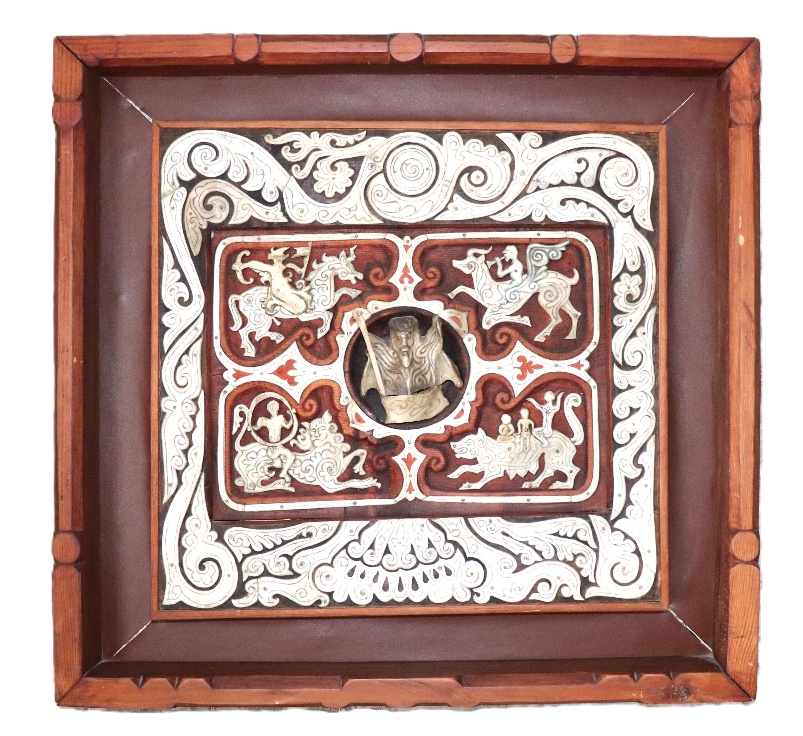
A complex system of ornamental and narrative elements forms the artistic basis of this decorative panel, executed in a mixed technique of wood and bone carving. The work is structured as a multi-layered visual space in which archaic motifs from ancient Turkic and Saka cultures receive a contemporary artistic interpretation.The composition is symmetrical and revolves around a central bone element, perceived as a sacred symbol or mythological image. Surrounding it are scenes featuring horsemen, fantastical animals and stylised anthropomorphic figures, forming a unique visual epic. This structure creates a sense of a ritual space, where every element is integrated into a single symbolic system.The contrast between the dark wood and the light bone not only enhances the decorative effect but also reveals the composition’s internal rhythmic organisation. The light bone elements serve as compositional accents, guiding the eye and emphasising the multi-layered nature of the design.The ornamental structure is based on flowing spiral lines and fluid rhythms, harking back to the traditional Kazakh decorative system. The fine detailing and intricate work with the relief demonstrate a high level of mastery of wood and bone carving techniques.The use of bone as the key accent material links the work to the traditions of Central Asian bone-carving art; however, the composition itself is not aimed at reconstructing a historical model, but at creating a contemporary exhibition piece. The artist translates archaic motifs into the realm of contemporary decorative sculpture, where mythological images become part of a modern artistic language.