
New Motif, 2009. Oil on canvas. From the artist’s personal archive
Shamil Guleev
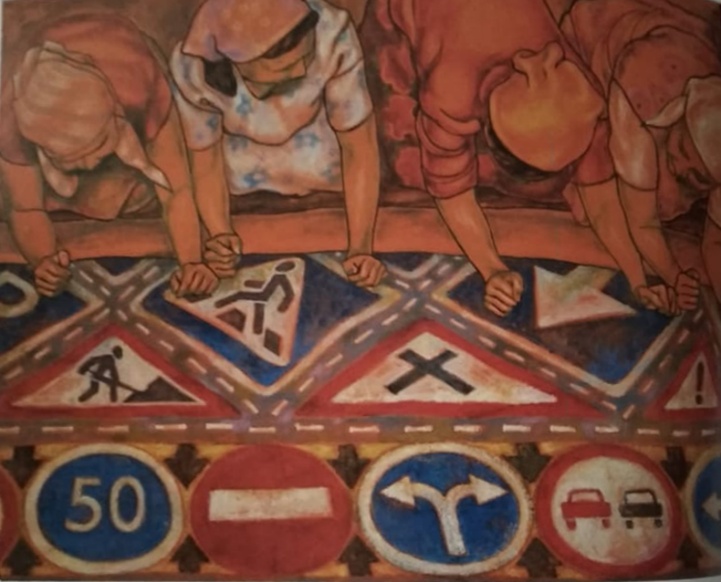
The composition is constructed on the principle of a fragmentary view from above, creating the effect of drawing the viewer into the space of the image. The plot is based on the traditional process of collectively felting a tekemet, yet instead of the usual ornamental motifs, the artist introduces images of road signs arranged in a rhythmic decorative band. This artistic technique links traditional culture with images of modern urban civilisation.Of particular interest is the treatment of the female figures. The artist avoids detailed individualisation of the faces, focusing instead on the plasticity of gestures and poses. As a result, the characters are perceived not as specific individuals, but as generalised female figures symbolising collective participation in the creation of a new cultural space. The symbolism of road signs carries significant meaning. They function not only as elements of urban infrastructure but also as a distinctive visual language of the new civilisation, reflecting the system of rules, landmarks and social codes of contemporary society. The inclusion of these signs within the structure of the traditional tekemet emphasises the idea of the transformation of cultural memory and the interaction of national tradition with the realities of the modern world.