
Residential house. 19th – early 20th century. Kultobe settlement
Residential house, 19th–early 20th century. Kultobe settlement, Turkestan Region
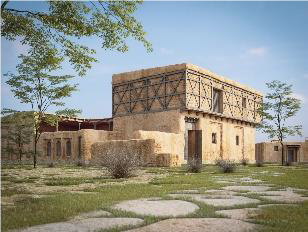
The architectural composition of the house is characterised by the functionality and enclosed nature of the interior space. The layout was organised around a courtyard system. The inner courtyard served not only as a domestic hub but also as the compositional centre of the house, providing lighting, ventilation and the organisation of the family’s daily life. The architectural forms of the house are characterised by restraint and conciseness, where artistic expressiveness is achieved not through an abundance of decoration, but through the harmony of proportions, the plasticity of the walls and the rhythm of the interior spaces.The interior of the dwelling is organised in accordance with the traditional way of life. The living rooms, with their niches for storing household items, textiles and crockery, occupied a central place. The hearth or tandyr played an important role, serving not only as a functional element but also as the symbolic centre of the family space. The interior décor was complemented by carpets, textiles and decorative and applied art objects, which shaped the artistic atmosphere of the home.