Traditional and contemporary art of Kazakhstan

A Virtual Journey into the World of Kazakhstan’s Artistic Heritage

This Web Gallery presents the diversity of artistic practices in Kazakhstan, reflecting the continuity of cultural traditions and the dynamic development of contemporary creative processes. The virtual exhibition features works based on national images, symbols, and themes, as well as artworks by contemporary artists who reinterpret the country’s cultural heritage through contemporary artistic forms, expressive means, and modern technologies.

The selected works demonstrate the relationship between traditional and contemporary art, revealing the distinctive features of the national worldview, cultural identity, and cultural meanings. The presented materials allow viewers to trace how elements of historical and cultural heritage are reflected in contemporary artistic practice, while maintaining their significance and relevance in an increasingly globalized world.

The Web Gallery is aimed at promoting Kazakhstan’s artistic heritage, expanding public access to works of art, and fostering a lasting interest in national culture and art among a wide audience.

Horse cover, 1930

1930. Almaty Region. Collection of the Central State Museum of the Republic of Kazakhstan
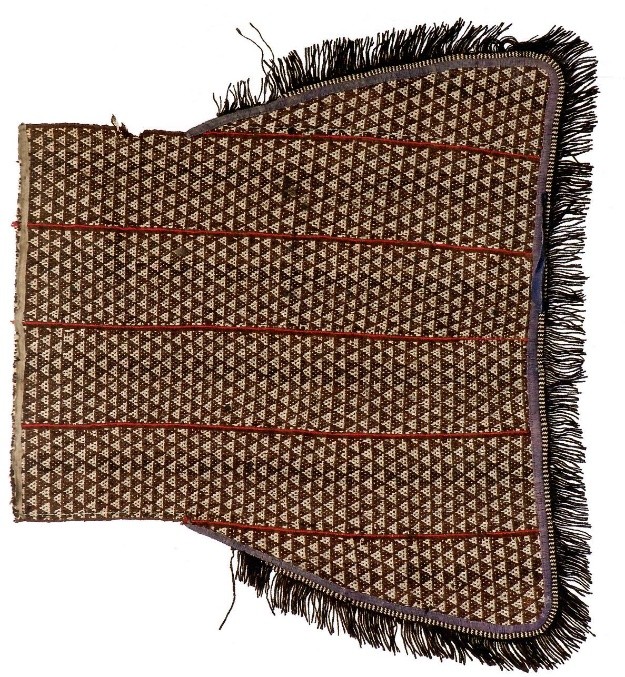
The horse blanket – atzhabu – is one of the oldest items of horse tack in Kazakh culture. In a nomadic society, the horse was not only a means of transport but also a symbol of status, military valour and freedom; consequently, its tack was characterised by particular attention to decorative design.The atzhabu served a practical purpose – it protected the horse’s back and flanks from the cold, dust and friction from the saddle. At the same time, it could have a distinct artistic significance: saddlecloths were made of felt or fabric, decorated with embroidery, applique, pile or non-pile weaving, and finished with tassels and fringe.This example is made using the terme technique. The main ornament is tumarsha, and the craftswoman has placed braid with an alakurt pattern along the edges.