
Sandyk
Late 19th – early 20th centuries. Collection of the Kyzylorda Regional Museum of History and Local Lore
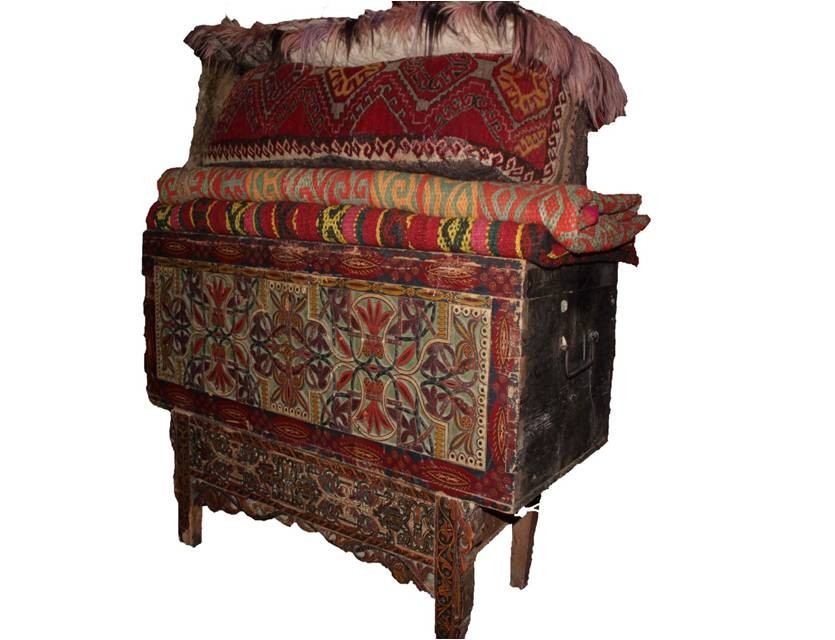
A chest- sandyk, whether for everyday use or for weddings, was made in the form of a rectangular box with a fixed, opening lid. The most common materials used to make chests were oak, birch and willow. Chests without legs were placed on stands and covered with ornamented covers. Wedding chests were small, decorated on all sides and adorned with corner turrets, the purpose of which researchers explain by the semantics of a hitching post or a symbol of the clan, hearth, and family (L. Tulbasieva). A chest was an important symbol of wealth and social status of a family. Chests, sometimes placed in a row or on top of each other, were placed against the wall of the yurt, marking the place of tor, the most honourable place in the dwelling. Bedding was stored in the chests, and beds – tosekagash – were placed next to them. Craftsmen used various techniques to decorate the chests: relief, painting, and the use of bone and stone details. If the craftsman made carved bone plates, red or black cloth was placed underneath them to serve as a contrasting background for the light-coloured bone. The chests varied in size, from small ones 30 cm high to ones measuring one and a half metres. Small, elegantly decorated chests were used for tea ceremonies – shai sandyk, in which sweets and tea were stored; mata sandyk contained clothes and fabrics; and zhuk sandyk held blankets and felt products.