
Bowl. 18th–19th centuries. Kultobe settlement
Bowl. 18th–19th centuries. Kultobe settlement
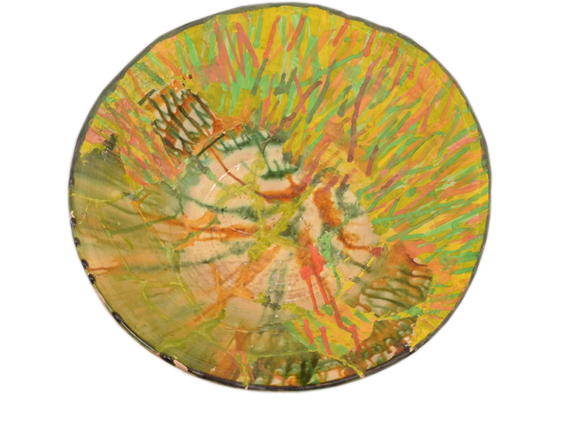
A distinctive artistic feature of this yellow-glazed bowl is its unique decorative technique: its inner surface is decorated with multicoloured drips, creating an effect of continuous movement directed towards the centre. This technique was characteristic of Samarkand pottery: before firing, the craftsmen splashed paints of various colours, which spread across the surface in the form of spots, streaks and drips.According to traditional beliefs, tableware could be affected by the ‘evil eye’, which led to the development of protective decorative techniques. Such items with drips were called ‘avr’ (‘cloud’) and were considered ‘chashm namegira’ — impervious to the evil eye. The painting on this bowl from the Kultobe settlement likely served a similar function, where green and reddish-brown pigments form a flowing ornament.The piece dates from the 18th–19th centuries; its diameter is 46.1 cm and its height is 16.1 cm.