
Earrings
East Kazakhstan. Silver, bent metal, coral. A. Kasteyev National Museum of Arts of the Republic of Kazakhstan
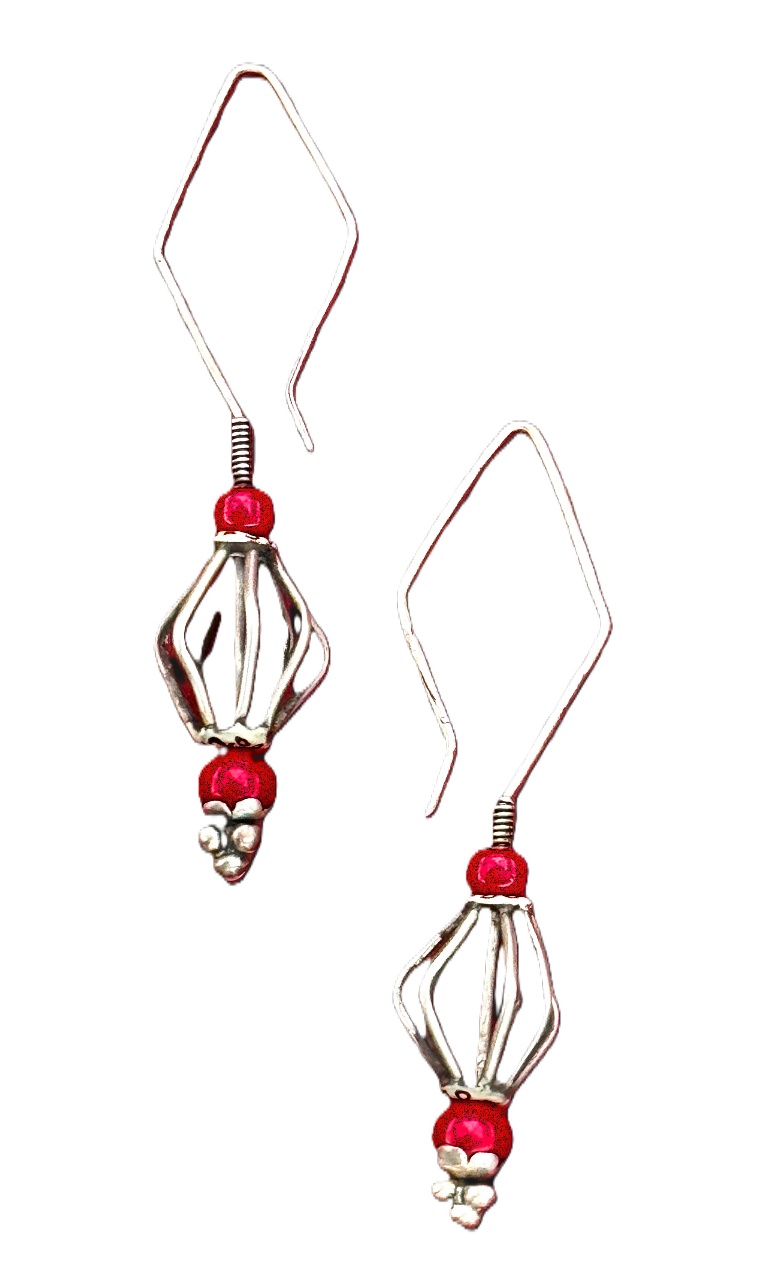
Syrga are linear, elongated drop earrings characteristic of the East Kazakhstani jewellery tradition of the late 19th and early 20th centuries. The piece is classified as an everyday decorative item and is distinguished by its minimalist design, with an emphasis on movement.The material is silver; decorative elements include coral inlays. The technique involves bending and shaping three-dimensional elements from curved metal rods.The design consists of a suspension system attached to an elongated hook-shaped bar. The main decorative element takes the form of an openwork three-dimensional body, formed from diverging curved rods. At the top and bottom, it is complemented by coral beads, which serve as connecting and accent elements. The lower part is finished with a small teardrop-shaped metal element.The composition is structured along an axial principle with a clear vertical orientation. The central three-dimensional element serves as the main compositional core, around which the entire structure is organised. The coral inserts create colour accents and enhance the rhythm of the composition.The ornamental scheme is minimalist and based on the plasticity of form. The openwork element forms an expressive silhouette and lends the structure a sense of lightness. The contrast between the silver surface and the bright coral inlays enhances the decorative expressiveness. The mobility of the elements lends the piece a sense of dynamism and is accompanied by a characteristic, delicate sound effect.