
Bridle
Leather, metal, coloured glass, embossing. A. Kasteev National Museum of Arts of the Republic of Kazakhstan
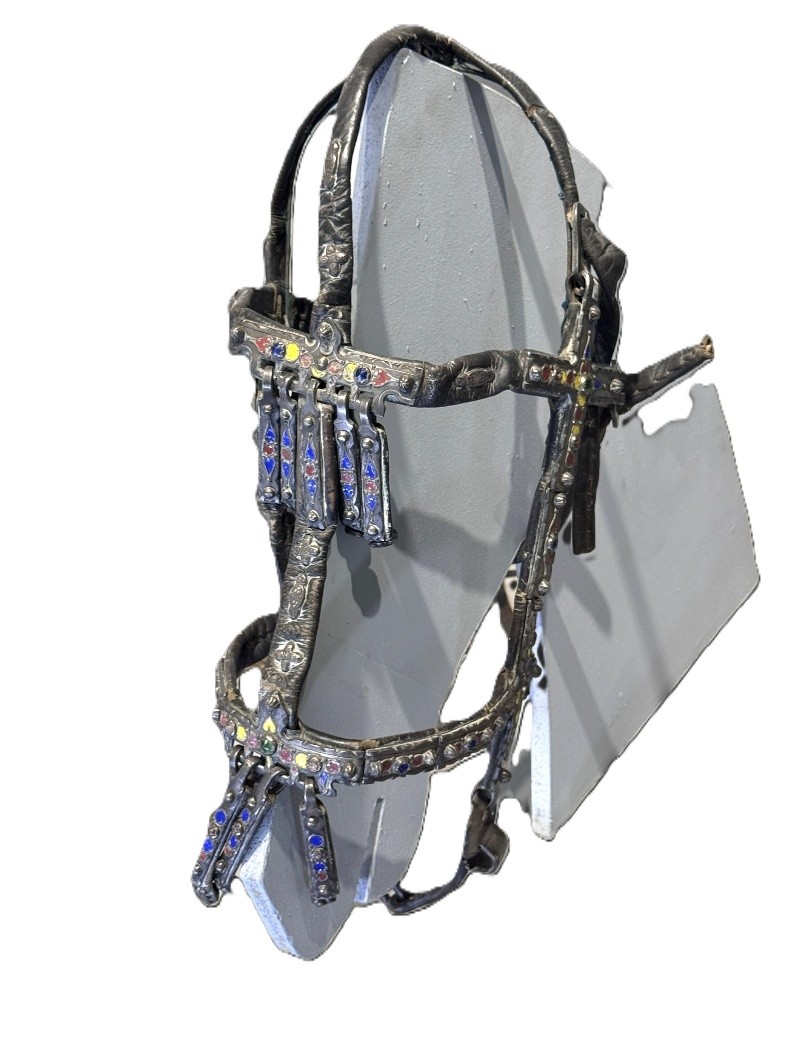
Jugen (bridle) The item is a horse bridle, designed as a functional element of a harness with a sophisticated decorative system. The construction includes a system of straps forming the headpiece and browband, as well as metal fastening and control elements.The base consists of leather straps treated using an embossing technique, creating a textured surface with ornamental elements. Metal plates are placed on key sections—the brow and nose pieces—forming decorative accents.The decorative design is based on the use of coloured glass inserts (in shades of blue, red and yellow), set in metal sockets. The inserts are arranged in linear and frieze compositions, emphasising the structural lines of the piece.The suspended elements at the bottom of the browband create additional dynamic movement in the form. They are designed as elongated plates with repeating inserts and enhance the visual rhythm.Compositionally, the product is structured according to the principle of symmetry, with an emphasis on the central axis of the animal’s head. The ornamentation and decorative elements are evenly distributed, ensuring a sense of visual unity.Technologically, the piece combines leatherwork (cutting, embossing), the manufacture of metal parts (casting, stamping) and the assembly of decorative inserts.The bridle belongs to the category of everyday objects of nomadic culture, where the functional elements of horse tack acquire the status of artistically designed objects. The decorative nature of the piece reflects the socio-aesthetic ideas and traditions of horse harness decoration in the 19th century.