
The Bride, 2024. Bronze, granite. Almaty
Alibi Seisov
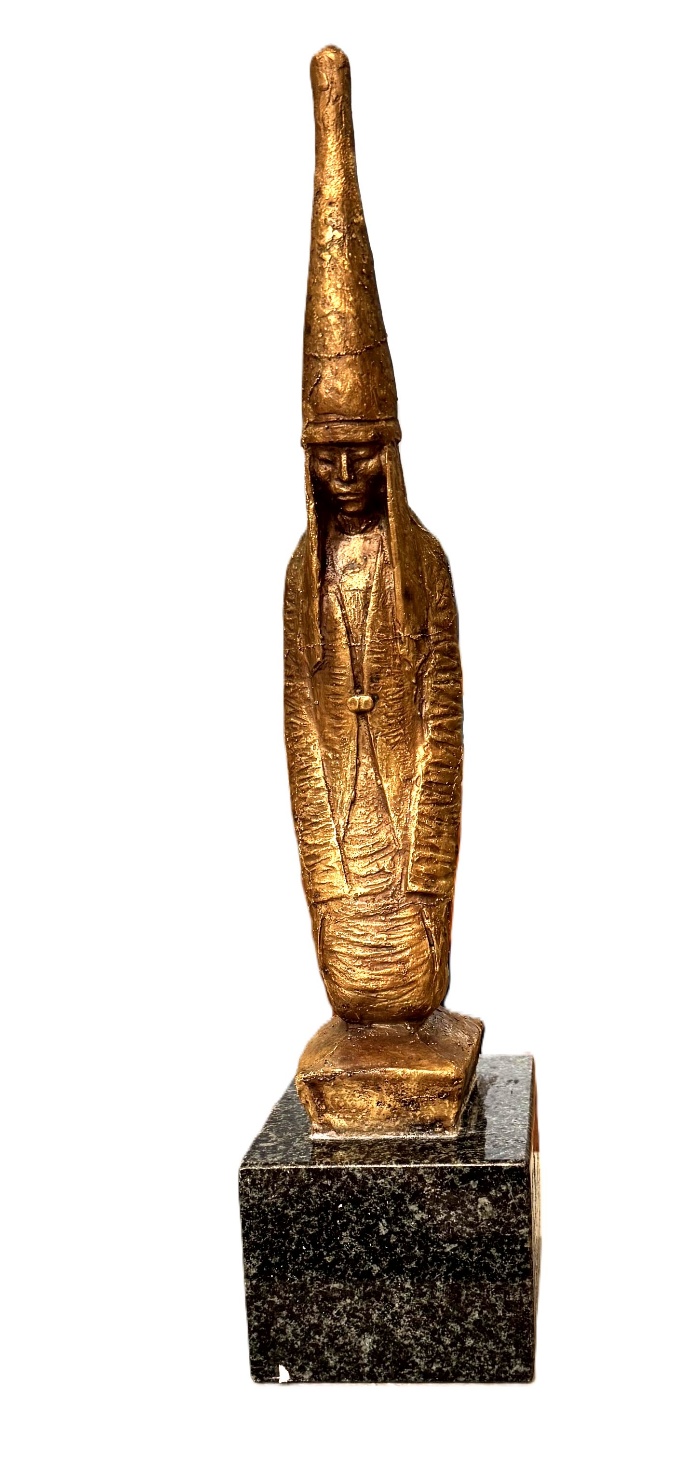
The image of the bride is revealed in the work through an extremely concise vertical composition, in which the female figure takes on the features of a generalised symbol. The sculpture is cast in bronze and mounted on a granite base, creating a striking interplay between the two materials — the malleable, ‘living’ metal and the stable, monumental mass of stone.The sculptural organisation of the form is based on elongated proportions and an emphasised vertical axis. The tall headdress and elongated silhouette lend the figure an inner composure and an almost ritualistic stillness. The composition is devoid of sharp sculptural accents: the closed contour and the integrity of the silhouette create a sense of stability and concentrated tranquillity. This approach brings the work closer to archaic cult images, where it is not individual characteristics but the symbolic essence of the figure that plays the most important role.The artist deliberately minimises detail. The face is rendered in a conventional manner and lacks portrait-like specificity, allowing the image to transcend the individual and acquire an archetypal significance. The plasticity of the clothing is organised through soft, rhythmic folds, which function not as a depiction of the fabric but as a means of forming the overall plastic structure. The headdress carries a particular semantic weight, being associated with the saukele — a traditional symbol of a girl’s transition to a new life stage.The expressiveness of the work is largely built on the textural treatment of the surface. The bronze retains traces of its working and varies from smoothed areas to rougher zones, allowing light to interact actively with the volume and emphasise the depth of the form. The granite plinth not only stabilises the composition but also reinforces its symbolic resonance, serving as a sign of stability, memory and support.The conceptual space of the work is linked to the theme of a transitional state — one of the key motifs of traditional culture. The image of the bride is interpreted not as a domestic scene, but as a visual metaphor for inner transformation and the sacred moment of life’s change. In this context, the figure bridges the categories of past and future, ancestral memory and the continuation of life.