
‘Totem’, 2000. Acrylic, wood pulp, ceramics, glass, metal, horns.
Shamil Guliev
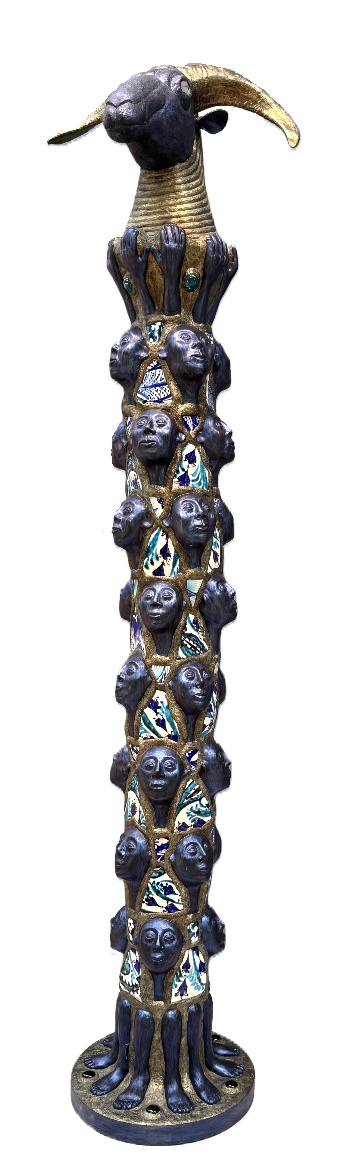
The totemic vertical forms the basis of the artistic concept behind this decorative-sculptural composition, executed in mixed media using wood pulp, ceramics and coloured decoration. The elongated structure is perceived as a distinctive sculptural column, evoking archaic models of sacred objects and ancient forms of collective symbolism.The composition develops according to the principle of successive accumulation of segments, within which anthropomorphic, mask-like faces are repeated. Their rhythmic alternation creates a sense of multiplicity and continuity of the image, where individual figures lose their autonomy and merge into a single sculptural system. The geometrised mesh structure enhances the object’s architectural quality and organises the complex internal rhythm of the surface.The lower part of the composition is built on a more generalised and monumental plasticity. The figures at the base are perceived as the supporting layer of the entire structure and create a sense of stability, as if holding up the vertical development of the form. Thanks to this, the object takes on the features of a kind of ‘tree of images’, developing from the ground to the upper symbolic level.The zoomorphic motif evokes associations with the ancient totemic beliefs and symbolism of the nomadic cultures of Central Asia. The upper element serves as the culmination of the vertical axis and, at the same time, as a symbol of the connection between the human, natural and sacred realms.Coloured and ceramic inlays break up the monotony of the dark clay body and accentuate individual structural zones of the composition. The contrast between the almost monochrome surface and the bright ornamental inclusions heightens the decorative tension of the object. Here, the ornamentation functions not as a secondary decoration, but as a system of visual codes linking the contemporary artistic form with an archaic symbolic tradition.The work’s thematic content is linked to the idea of collective memory and the continuity of generations. Multiple anthropomorphic figures, united in a single vertical line, form a metaphor for cultural identity existing beyond the individual. The work reflects a trend characteristic of contemporary art in Kazakhstan towards the synthesis of traditional archetypes, ethno-cultural symbolism and the language of contemporary art, in which the archaic totem is reinterpreted as a contemporary artistic image.