
‘Scarab Beetle’, 2011
Moldakul Narymbetov • Art object. Artist’s own technique. Old car tyres. Garden of Stones, Perm
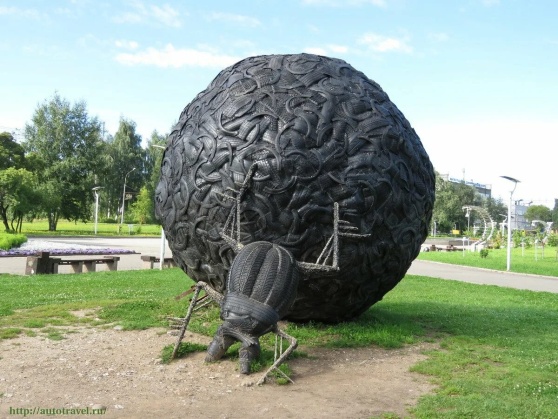
This art installation by Moldakula Narymbetova (1948–2012) was created in 2011 in Perm. The artist was working there on the sculpture as part of the public art programme run by the PERMM Museum of Contemporary Art. According to the artist’s own recollections, the idea for the work was inspired by the very nature of the Kazakh steppe. One day, he saw a small beetle rolling a large ball in front of it. He then thought that the image of the beetle reminded him of a hard-working person. The mythological image of the scarab beetle, revered by the ancient Egyptians for its tireless care for its offspring – for it was precisely by rolling a ball containing its eggs that the beetle helped bring its progeny into the world. The scarab was likened to the sun, which gives life to everything on earth through its light and warmth. In one of his interviews, Moldakul Narymbetov noted that the scarab beetle is a symbol understood and accepted by humanity since the most ancient times; in his own work, however, he sees it as a symbol of contemporary art, which does not so much create new things as rework cultural values that have endured for centuries. But that is not all: many of the artist’s art objects are characterised by his signature technique of using old car tyres (upcycling: the reprocessing and reuse of materials or objects to create new functional and valuable items).
Source: https://avatars.mds.yandex.net/i?id=ce1c079cf55662961d31979d04538cb0_l-8236365-images-thumbs&ref=rim&n=13&w=1200&h=900