Traditional and contemporary art of Kazakhstan

A Virtual Journey into the World of Kazakhstan’s Artistic Heritage

This Web Gallery presents the diversity of artistic practices in Kazakhstan, reflecting the continuity of cultural traditions and the dynamic development of contemporary creative processes. The virtual exhibition features works based on national images, symbols, and themes, as well as artworks by contemporary artists who reinterpret the country’s cultural heritage through contemporary artistic forms, expressive means, and modern technologies.

The selected works demonstrate the relationship between traditional and contemporary art, revealing the distinctive features of the national worldview, cultural identity, and cultural meanings. The presented materials allow viewers to trace how elements of historical and cultural heritage are reflected in contemporary artistic practice, while maintaining their significance and relevance in an increasingly globalized world.

The Web Gallery is aimed at promoting Kazakhstan’s artistic heritage, expanding public access to works of art, and fostering a lasting interest in national culture and art among a wide audience.

Zikr-khana (dhikr hall). 17th–19th centuries. Kultobe settlement

17th–19th-century zikr-khana. Kultobe settlement, Turkestan Region
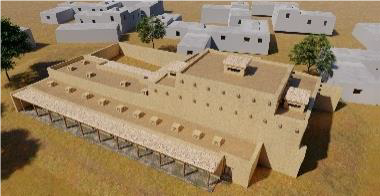
This is a unique monument of religious architecture in Southern Kazakhstan. The structure is associated with the Sufi tradition and served as a venue for religious gatherings, collective prayers and zikr rituals — a spiritual practice of remembrance of God, widespread in the Islamic culture of Central Asia.The architectural appearance of the zikr-khana is characterised by restraint and an inward focus of the space, which corresponds to its sacred purpose. The layout of the building is designed to create a secluded and intimate atmosphere, necessary for prayer and spiritual communion. The spatial organisation is centred around a central room intended for gatherings of those participating in the ritual.