Traditional and contemporary art of Kazakhstan

A Virtual Journey into the World of Kazakhstan’s Artistic Heritage

This Web Gallery presents the diversity of artistic practices in Kazakhstan, reflecting the continuity of cultural traditions and the dynamic development of contemporary creative processes. The virtual exhibition features works based on national images, symbols, and themes, as well as artworks by contemporary artists who reinterpret the country’s cultural heritage through contemporary artistic forms, expressive means, and modern technologies.

The selected works demonstrate the relationship between traditional and contemporary art, revealing the distinctive features of the national worldview, cultural identity, and cultural meanings. The presented materials allow viewers to trace how elements of historical and cultural heritage are reflected in contemporary artistic practice, while maintaining their significance and relevance in an increasingly globalized world.

The Web Gallery is aimed at promoting Kazakhstan’s artistic heritage, expanding public access to works of art, and fostering a lasting interest in national culture and art among a wide audience.

Akbaskur 20th c.

Collection of the ‘Khan Ordasy’ Museum-Reserve
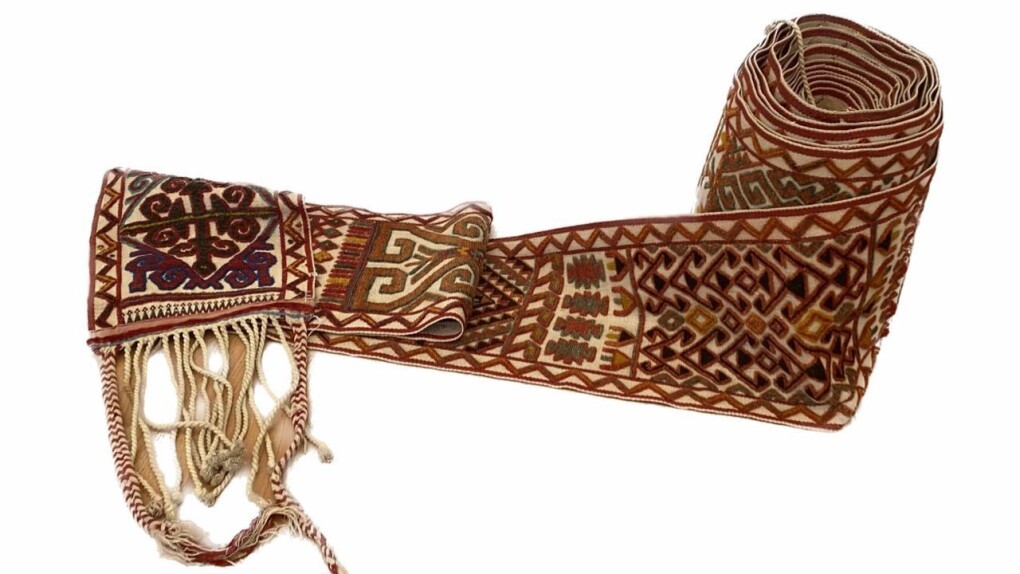
A Baskur is a wide decorative woven belt used to tie together the junction of the uyk and kerege in the yurt’s structure. It serves both structural and artistic functions: it reinforces the frame and gives the interior a finished appearance.There are several varieties: the qyzyl baskur, characterised by a predominance of rich red tones; the ala baskur, featuring a multicoloured striped or ornamented design; and the aq baskur, executed predominantly in a light colour scheme.The ornamentation of the baskur is most often based on the rhythmic repetition of horn-shaped, diamond-shaped and zigzag motifs. Semantically, it forms a symbolic boundary between the upper and lower parts of the yurt, acting as a kind of ‘protective belt’ for the home. In this capacity, the baskur not only reinforces the structure but also embodies the idea of protection, integrity and harmony within the family space.