
Tөsekagash
Bed. Wood, bone, metal, carving, inlay. A. Kasteev National Museum of Art of Kazakhstan. • Zhastykaash. Headrest. Carving
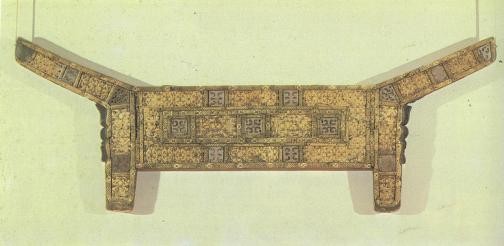
Tosekagash is a bed whose variety of structural and ornamental designs has been studied by many researchers of Kazakh folk art. In museum and family collections, there are collapsible beds made without the use of metal nails. In his study, based on the results of an expedition in the mid-20th century, E.A. Masanov identified three main types of beds: 1) two sloping backs on four legs; 2) two sloping backs on six or eight legs; 3) one sloping back on four legs (couch type) (Masanov 40). As with other items of Kazakh furniture for yurts, only the front of the bed was decorated. The materials and methods of ornamentation depended on the creative imagination of the craftsman: various techniques of carving, painting, bone inlay were used; silver engraved or cast plates were applied to the wooden parts of the bed. The arrangement of ornamental elements and motifs – swirl rosettes, shugla, sharsh, etc. – represents compositions dominated by ribbon repeats, repeat grids, or a carpet pattern with a large medallion in the centre. In tsekagash, wooden carvings in rectangular shapes in the central field alternate with metal plates, while the border repeats the rhythm of the smaller shapes in the central field, but in a checkerboard pattern. The sloping sides of the bed and its legs are also decorated in this manner.
In a yurt, the owners’ bed was placed to the right of the entrance and covered with special embroidered curtains called shymyldyk