
Dastarkhan. 12th century. Otrar
12th century. From the book ‘Ceramics of Medieval Otrar’, Almaty, 1991
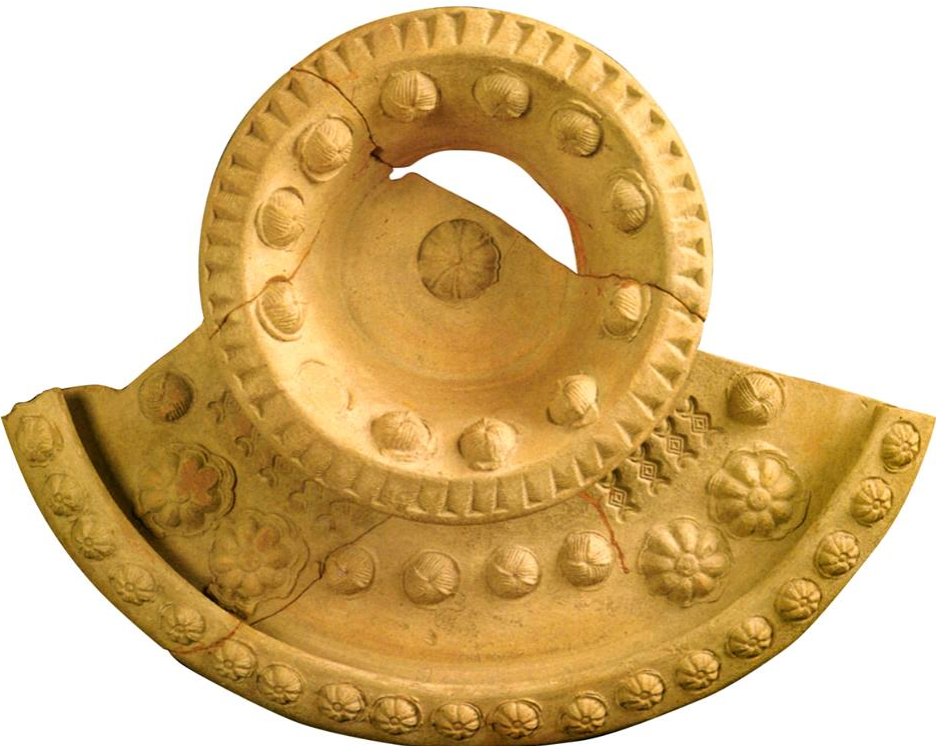
Medieval clay dastarkhans represent a specific type of ceramic ware, widespread across Central Asia during the 9th–15th centuries, which served both utilitarian and cultural-symbolic functions. The term ‘dastarkhan’ is used here in a general sense to denote large ceramic dishes or trays. Their emergence and widespread use are linked to a long-standing tradition of communal dining. The ornamentation of these items is characterised by consistent motifs and a restrained yet expressive composition. The most common designs are geometric patterns in the form of concentric circles, radial lines and bands, as well as stylised plant elements—rosettes, flowers and other motifs. The ornamentation was often applied to the wet clay. In some cases, epigraphic elements containing good wishes or religious formulas are found.