Traditional and contemporary art of Kazakhstan

A Virtual Journey into the World of Kazakhstan’s Artistic Heritage

This Web Gallery presents the diversity of artistic practices in Kazakhstan, reflecting the continuity of cultural traditions and the dynamic development of contemporary creative processes. The virtual exhibition features works based on national images, symbols, and themes, as well as artworks by contemporary artists who reinterpret the country’s cultural heritage through contemporary artistic forms, expressive means, and modern technologies.

The selected works demonstrate the relationship between traditional and contemporary art, revealing the distinctive features of the national worldview, cultural identity, and cultural meanings. The presented materials allow viewers to trace how elements of historical and cultural heritage are reflected in contemporary artistic practice, while maintaining their significance and relevance in an increasingly globalized world.

The Web Gallery is aimed at promoting Kazakhstan’s artistic heritage, expanding public access to works of art, and fostering a lasting interest in national culture and art among a wide audience.

NadesLocation: Almaty, Almaty Museum of ArtsSource: Informburo.kz

Jaume Plensa
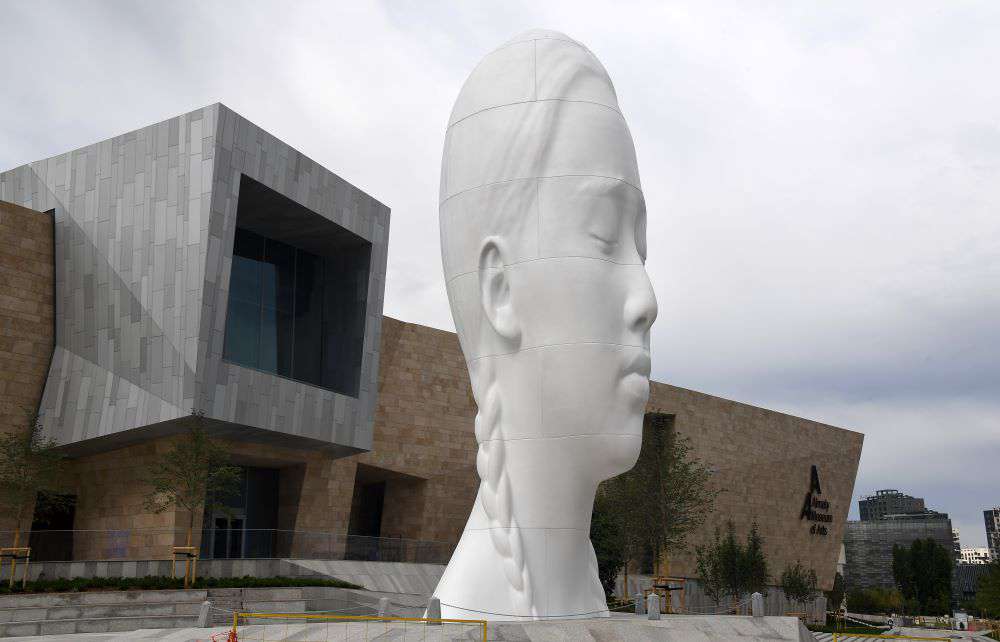
‘Nades’ is part of the famous series of monumental female heads, which Jaume Plensa refers to as ‘portraits of the soul’. In his works, the artist draws on the universal human image. The sculpture stands approximately 12 metres tall. The viewer is presented with the image of a young woman with her eyes closed and two long plaits. Unlike many of Plensa’s other works, created for various cities around the world, ‘Nades’ incorporates an important local cultural element: the plaits allude to the traditional image of a Kazakh girl and seamlessly integrate the work into the cultural context of Kazakhstan. In terms of artistic language, the work is built on the principle of contrast between the monumentality of form and a state of inner stillness. The heroine’s closed eyes create an effect of meditative immersion and become a symbol of contemplation, self-discovery and spiritual focus.