
Tuskiz, 2017. K. Zhangutty
Tuskiiz. Felt, felting, inlay, embroidery. Early 20th century. • From the collection of the ‘Ruhaniyat – Abu Nasir al-Farabi’ Museum (Shauldir village)
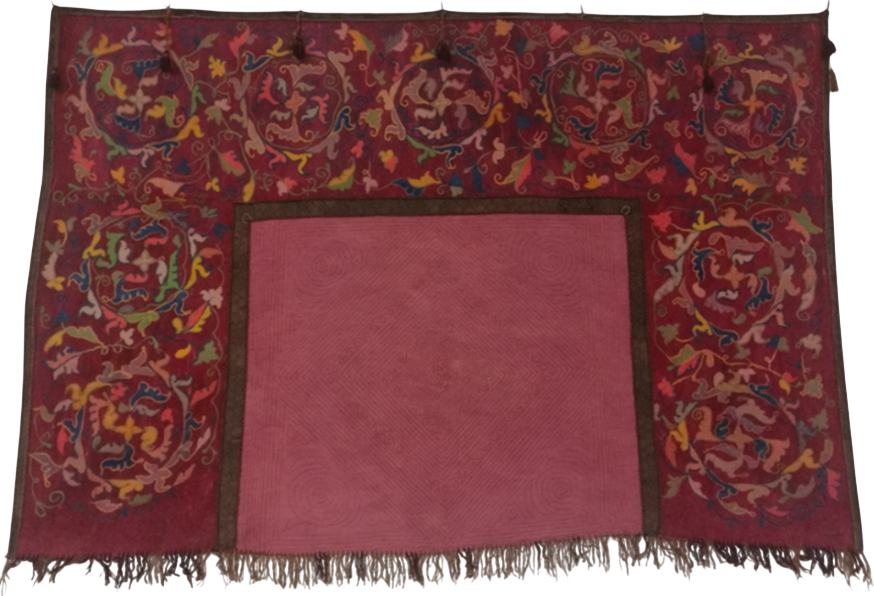
In terms of composition, the piece is designed in a traditional U-shape: the central panel is left free of ornamentation, as custom dictated that this section be covered by bedding or a curtain, whilst the decorative focus is shifted to the wide borders. The artistic language is based on the rhythmic repetition of curvilinear patterns, with the ‘muyiz’ motif—an ancient symbol of prosperity and vitality—serving as the dominant motif. The colour scheme is based on the archaic contrast between red and natural white (or light grey). In Kazakh tradition, red represents fire, the sun and creative energy, whilst white symbolises purity and fidelity. The dark graphic lines along the edges of the ornamental bands lend the composition stability and a sense of visual completeness.