Traditional and contemporary art of Kazakhstan

A Virtual Journey into the World of Kazakhstan’s Artistic Heritage

This Web Gallery presents the diversity of artistic practices in Kazakhstan, reflecting the continuity of cultural traditions and the dynamic development of contemporary creative processes. The virtual exhibition features works based on national images, symbols, and themes, as well as artworks by contemporary artists who reinterpret the country’s cultural heritage through contemporary artistic forms, expressive means, and modern technologies.

The selected works demonstrate the relationship between traditional and contemporary art, revealing the distinctive features of the national worldview, cultural identity, and cultural meanings. The presented materials allow viewers to trace how elements of historical and cultural heritage are reflected in contemporary artistic practice, while maintaining their significance and relevance in an increasingly globalized world.

The Web Gallery is aimed at promoting Kazakhstan’s artistic heritage, expanding public access to works of art, and fostering a lasting interest in national culture and art among a wide audience.

Chapan 18th–19th c.

18th–19th centuries. National Museum of the Republic of Kazakhstan
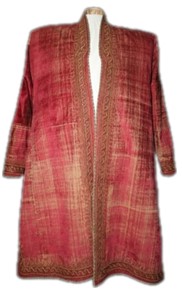
The shapan is made of red velvet and has a loose fit. The front of the garment opens. On the front, in the centre, there is a placket decorated with gold-thread embroidery featuring a floral pattern. The ornamental composition is symmetrical and gives the garment a solemn and decoratively expressive appearance.The construction of the shapan consists of several main parts: the body, the side panels and the sleeves. A distinctive feature of the garment is its decorative trim – the edging of the edges with braid. The braid runs around the entire perimeter of the garment: it adorns the sleeves, the collar, the sides and the hem of the shapan.In terms of its artistic and structural features, the shapan is classified as ceremonial attire. The richness of the fabric and the use of gold embroidery attest to the high status of the owner.