
Vessel. 10th–12th centuries. Taraz
10th–12th centuries. Taraz. Photo by M. Tyo
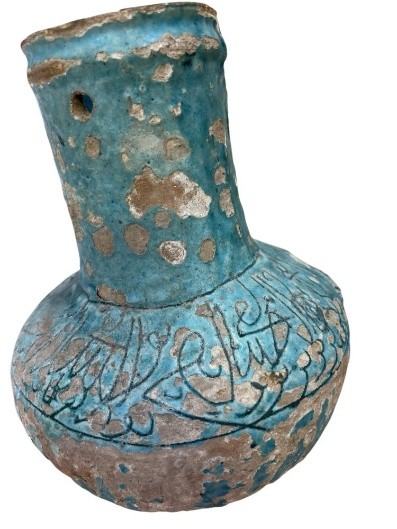
On medieval ceramic tableware, quotations from the Quran and auspicious formulas were often arranged in the form of continuous ornamental bands or rectangular compositions formed by elongated and stylised letters. This style of decoration is linked to the traditions of Islamic calligraphy, within which writing served not only an informative but also a decorative function. The text was organically integrated into the ornamental scheme of the piece, often conforming to the overall composition of the vessel.There was a widespread belief that tableware bearing such inscriptions possessed a beneficial, protective influence, helping to safeguard the owner and bring them prosperity. Such inscriptions are most found on glazed ceramics, where the smooth surface and the contrast of the underglaze painting ensured the clarity and expressiveness of the calligraphic decoration, enhancing its visual and symbolic significance.