
Muzbalak, 2023. Silver, gold, casting, filigree. Almaty
Estay Daubayev
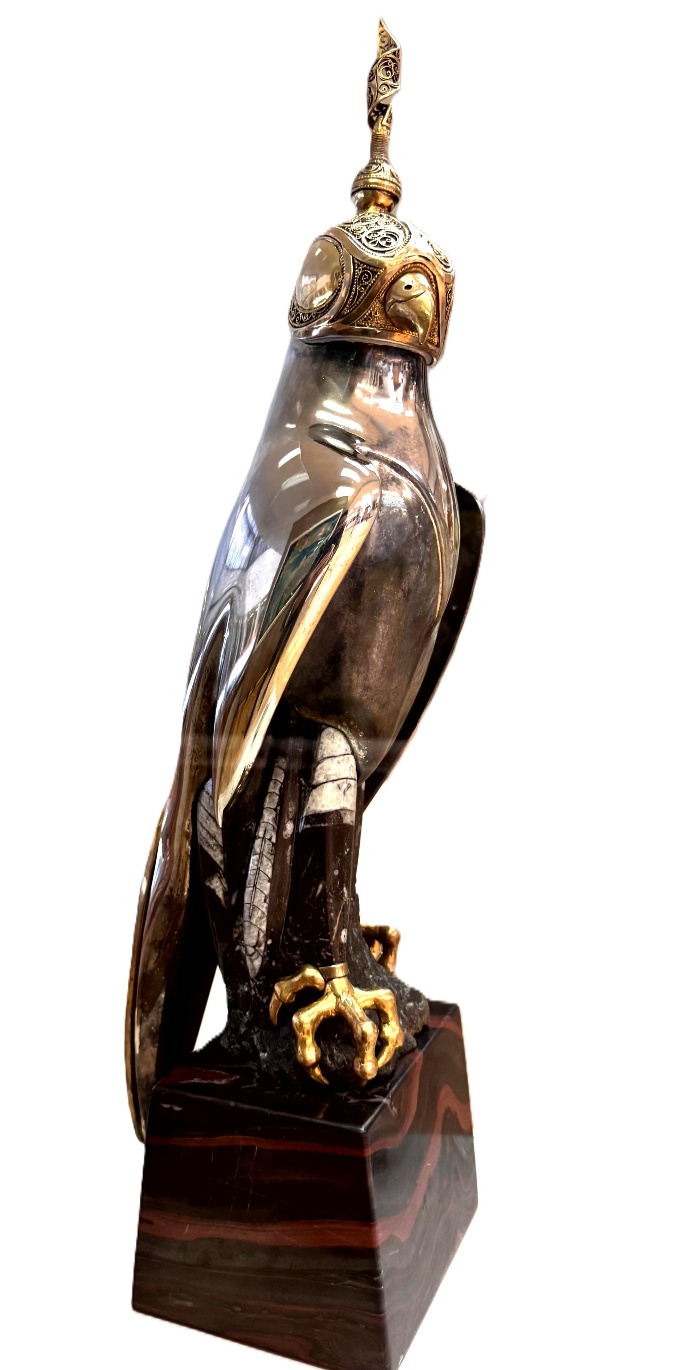
The image of a bird of prey in the work is revealed through a combination of small-scale sculpture and the traditions of jewellery art. The use of silver and gold, as well as casting and filigree techniques, allows the artist to create a complex decorative structure in which material value is combined with a high degree of artistic generalisation.The composition is built on a stable vertical axis with a slight twist of the body, thanks to which the figure is perceived as both static and internally tense. The elongated silhouette, smoothly defined contours and fluidity of the lines create a sense of hidden movement and concentrated energy. The plasticity of the wings and body develops in a unified rhythm, creating a cohesive and harmoniously balanced image. The massive base stabilises the composition, emphasising the contrast between the weight of the base and the visual lightness of the upper part.The decorative treatment of the surface takes on artistic significance. The upper part of the figure, including the head element, is richly adorned with filigree ornamental motifs linked to the traditions of Kazakh jewellery art. Here, the ornamentation serves not only an aesthetic function but also acts as a vehicle for cultural symbolism, emphasising the sacredness and status of the figure. The contrast between the smoothly polished silver and the relief gold details enhances the play of light and lends the surface a particular visual depth.The sculptural interpretation of the supporting elements and claws emphasises the bird’s strength and stability, whilst the direction of its gaze and the elongated configuration of its body create a sense of imminent flight. The ‘Muzbalak’ design combines notions of freedom, vigilance, nobility and spiritual elevation, which are traditionally significant in Turkic and Kazakh culture. In the artist’s interpretation, this symbol transcends the ethno-cultural context and takes on a universal philosophical resonance as a metaphor for inner independence and the aspiration for greatness.