
QoqystasLocation: Astana, ‘Nur Alem’ exhibition pavilion Source: ‘Vremya’ newspaper
The ‘Zhana Adamdar’ group
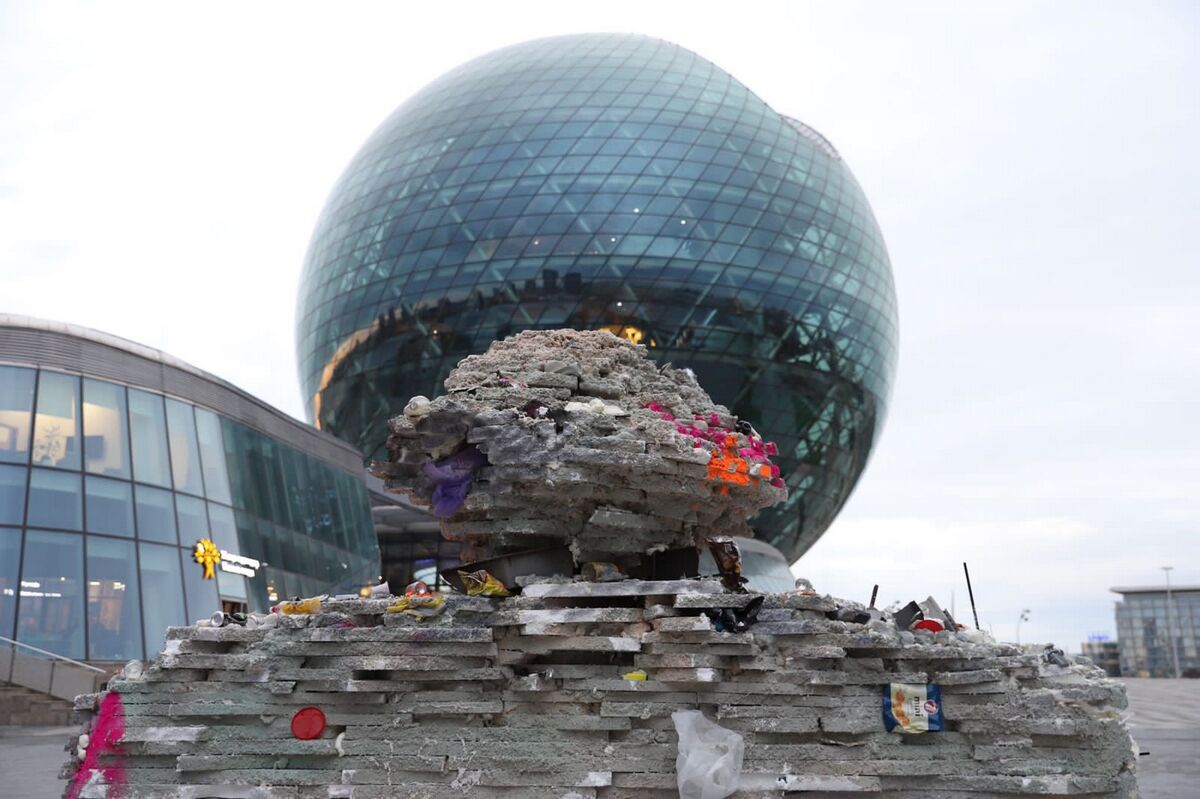
The art installation ‘Qoqystas’ is an example of ecological public art, in which the artistic image serves as a tool for social criticism and public expression. The composition is based on the principle of visual metaphor: one of Kazakhstan’s most recognisable natural symbols — the Zhumbaktas in the Burabai landscape — is transformed into an image distorted by human activity.The title of the work provides the key to its interpretation. The neologism ‘Kokystas’, formed by combining the words ‘qoqys’ (rubbish) and ‘tas’ (stone), creates a semantic clash between the natural and the man-made. As a result , a sacred natural object is transformed into a symbol of the ecological crisis caused by humanity’s consumerist attitude towards the environment.The composition is based on the contrast between the stability of the natural monolith and the chaotic mass of household waste. The surface of Zhumbaktas, covered in graffiti, alludes to the problem of vandalism, whilst the pile of rubbish surrounding it illustrates the scale of pollution in tourist areas. Particularly striking is the artistic technique whereby the volume of collected waste is made comparable to that of the natural feature itself. In this way, the artists transform statistical data into a vivid visual image that is accessible to the viewer’s immediate emotional perception.