
Quraq. Made in Kazakhstan. Tapestry. 2014. Wool, acrylic, silk, hand-woven. Source: https://nomadmgz.kz
Malik Mukanov
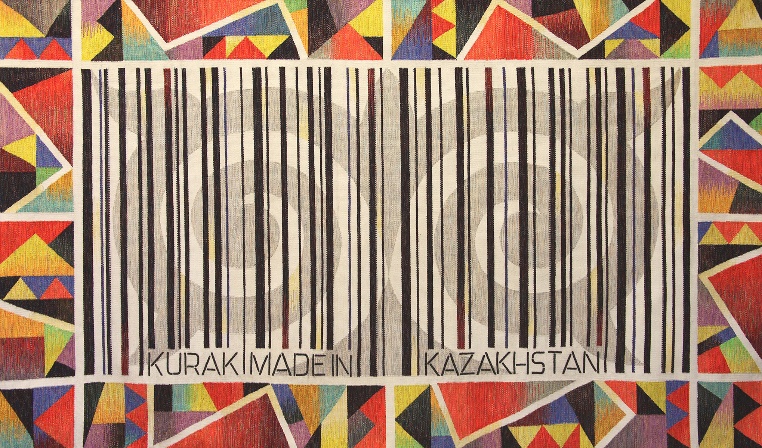
The work is based on the synthesis of two sign systems — traditional ornamentation and the barcode — which transforms the decorative composition into a complex cultural statement on national identity in the age of mass consumption.The central semiotic element of the work is the barcode – a universal symbol of commodity circulation, standardisation and the global economy. In the contemporary visual landscape, it designates an object as a market product, subject to identification and commercial circulation. The artist contrasts this symbol with the traditional ornamental motif of the qoshqar muiz and the structure of the quraq korpe, historically linked to ideas of family memory, generational continuity and a respectful attitude towards materials. The result is a dialogue between cultural heritage and the mechanisms of the modern global system.Of particular significance is the inscription ‘MADE IN KAZAKHSTAN’, which, in this context, ceases to be a mere indication of the product’s origin. It becomes a declaration of cultural identity and a symbol of the affirmation of the national artistic code on the international stage.