
Decorative helicopter toy. Wood, hand-carved, sanded.
Alnur Zharkynbaev
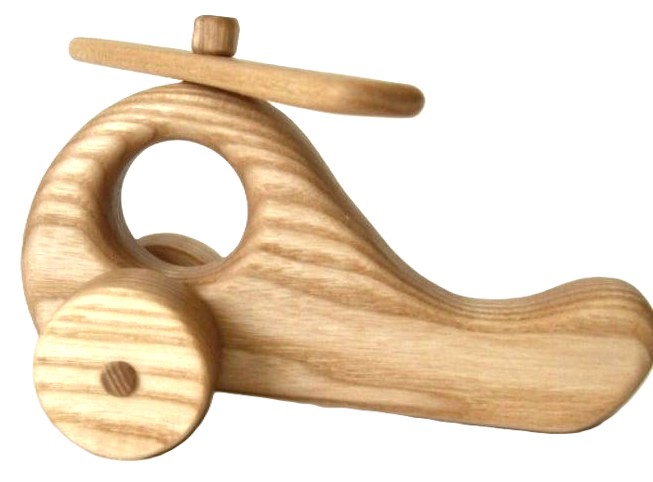
Minimalist form and the extreme abstraction of the shape define the artistic character of this wooden toy, crafted in the form of a helicopter. The artist deliberately eschews naturalistic detail, transforming the object from a traditional toy into a contemporary design piece and a small-scale sculpture.The artistic concept is based on the integrity of the silhouette and the fluidity of spatial transitions. The body is perceived as a single monolithic volume, in which rounded forms and soft lines create a sense of organic unity and visual balance. The large circular opening in the central section serves both a structural and compositional function, creating a characteristic rhythm of void and mass.The propeller, wheels and additional elements are designed with the utmost simplicity and do not overload the form with details. As a result, attention is focused on the overall form of the object and the tactile qualities of the material. Light-coloured wood with a natural texture becomes an important part of the visual image. Careful sanding of the surface emphasises the material’s natural warmth and reinforces the object’s sense of sustainability. The designer preserves the natural qualities of the wood, allowing the texture to contribute to the product’s aesthetics on a par with its form and construction.