Traditional and contemporary art of Kazakhstan

A Virtual Journey into the World of Kazakhstan’s Artistic Heritage

This Web Gallery presents the diversity of artistic practices in Kazakhstan, reflecting the continuity of cultural traditions and the dynamic development of contemporary creative processes. The virtual exhibition features works based on national images, symbols, and themes, as well as artworks by contemporary artists who reinterpret the country’s cultural heritage through contemporary artistic forms, expressive means, and modern technologies.

The selected works demonstrate the relationship between traditional and contemporary art, revealing the distinctive features of the national worldview, cultural identity, and cultural meanings. The presented materials allow viewers to trace how elements of historical and cultural heritage are reflected in contemporary artistic practice, while maintaining their significance and relevance in an increasingly globalized world.

The Web Gallery is aimed at promoting Kazakhstan’s artistic heritage, expanding public access to works of art, and fostering a lasting interest in national culture and art among a wide audience.

Bespakyr mausoleum

Early 20th century. Akmola Region
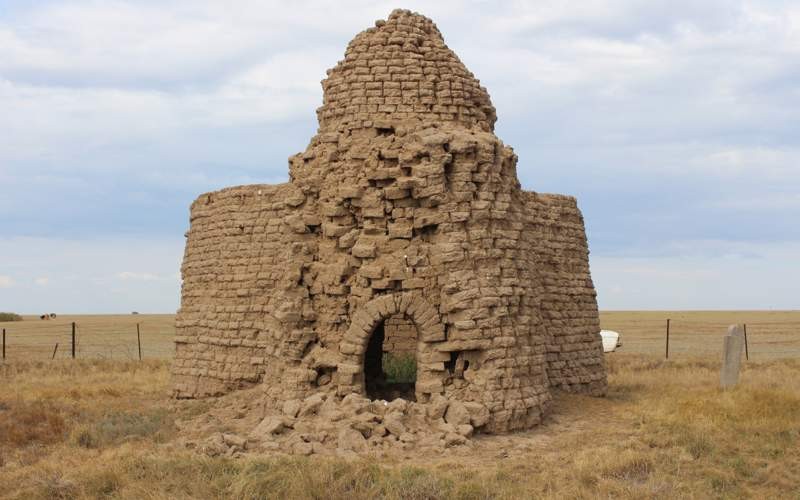
Adobe mausoleums occupy a special place in the traditional architecture of Kazakhstan and represent an important category of funerary and religious structures. Their structural basis is adobe brick (saman), which is due to the availability of the material and its adaptation to the natural and climatic conditions of the steppe zone. Such structures blend seamlessly into the natural landscape and demonstrate the rational use of local building resources. From the perspective of architectural art, yurt-like and conical mausoleums are of particular interest, as they typologically trace their origins back to the traditions of pre-Islamic architecture. Many mazar have a characteristic tent-dome structure, visually and symbolically reminiscent of a yurt, which testifies to the continuity of the nomadic worldview in sacred architecture.