Traditional and contemporary art of Kazakhstan

A Virtual Journey into the World of Kazakhstan’s Artistic Heritage

This Web Gallery presents the diversity of artistic practices in Kazakhstan, reflecting the continuity of cultural traditions and the dynamic development of contemporary creative processes. The virtual exhibition features works based on national images, symbols, and themes, as well as artworks by contemporary artists who reinterpret the country’s cultural heritage through contemporary artistic forms, expressive means, and modern technologies.

The selected works demonstrate the relationship between traditional and contemporary art, revealing the distinctive features of the national worldview, cultural identity, and cultural meanings. The presented materials allow viewers to trace how elements of historical and cultural heritage are reflected in contemporary artistic practice, while maintaining their significance and relevance in an increasingly globalized world.

The Web Gallery is aimed at promoting Kazakhstan’s artistic heritage, expanding public access to works of art, and fostering a lasting interest in national culture and art among a wide audience.

Mural: ‘Girl in a Saukele’. Alikhan Bokeikhanov District, Microdistrict 19, Building 49, KaragandaPhoto from open sources

Sketch by: Zhuldyz Zholbarys, Artists from the AirG group: Aidar Munaitpasov and Almaz Abdygalikov
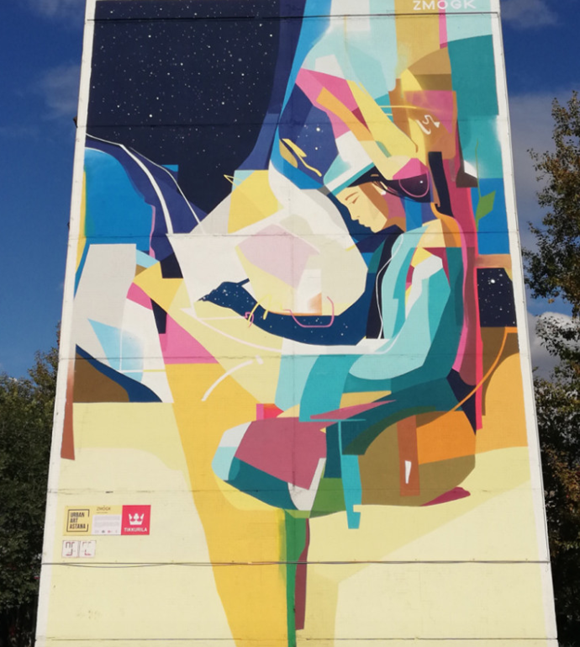
This monumental mural, covering the side façade of a high-rise building, centres on a large profile image of a bride wearing a traditional wedding headdress – a saukele. The main compositional focus is on the face and the rich decoration of the heroine’s headdress, giving it the character of an icon. The symbolism of the character is perceived as an archetype, the embodiment of cultural memory, feminine beauty and dignity.The composition of the space, divided into two semantic zones, possesses visual balance. The left-hand side is filled with ornamentation that forms the cultural context of the image, linking the figure to the artistic heritage. The right-hand side creates a theatrical effect and enhances the monumentality of the image. The mural functions as a form of public memory, affirming the value of traditional visual codes in the contemporary urban space.