
Riding the Wind, 2022. Oil on canvas. From the artist’s private collection
Aigerim Karibaeva
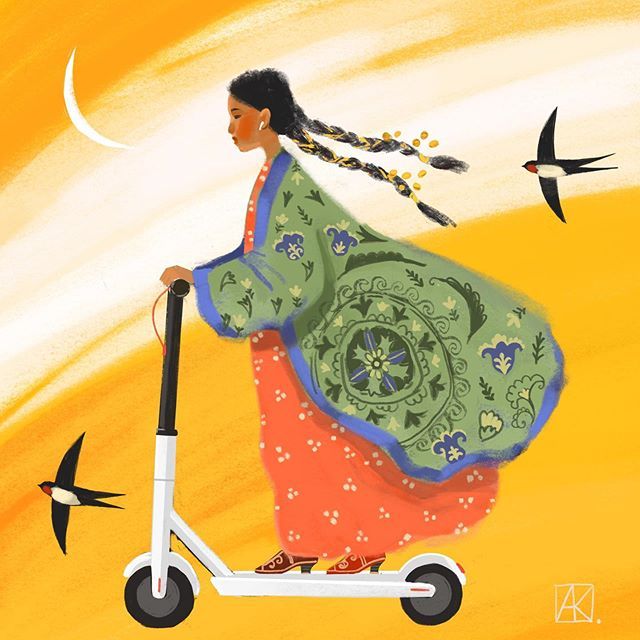
The work centres on the image of a young woman speeding along on an electric scooter. The figure is depicted in profile, giving the composition a distinct sense of movement. Her billowing chapan and long braids heighten the sensation of speed and literally visualise the motif of the wind, as suggested by the painting’s title. The dynamism is further enhanced by two swallows accompanying the girl’s figure. Their presence not only evokes associations with flight and freedom but also introduces an important cultural symbol: in Kazakh tradition, the swallow is considered a bird of prosperity, domestic comfort and good news. The slender crescent moon against a golden-orange background lends the scene a poetic quality and a touch of the fairy-tale, transforming an everyday scene into a metaphorical realm.The heroine is dressed in a long dress and an ornate chapan. Sholpy — traditional ornaments that, according to custom, should jingle with movement — are woven into her braids. In the context of the painting, this ancient cultural element takes on a new resonance: it is now associated not with a leisurely gait, but with the speed of the modern urban rhythm. At the same time, the electric scooter and wireless headphones become symbols of the present era, emphasising the heroine’s mobility, independence and integration into the global urban environment.