
Wall alasha carpet, first half of the 20th c.
First half of the 20th century. Karaganda Region. Collection of the Central State Museum of the Republic of Kazakhstan
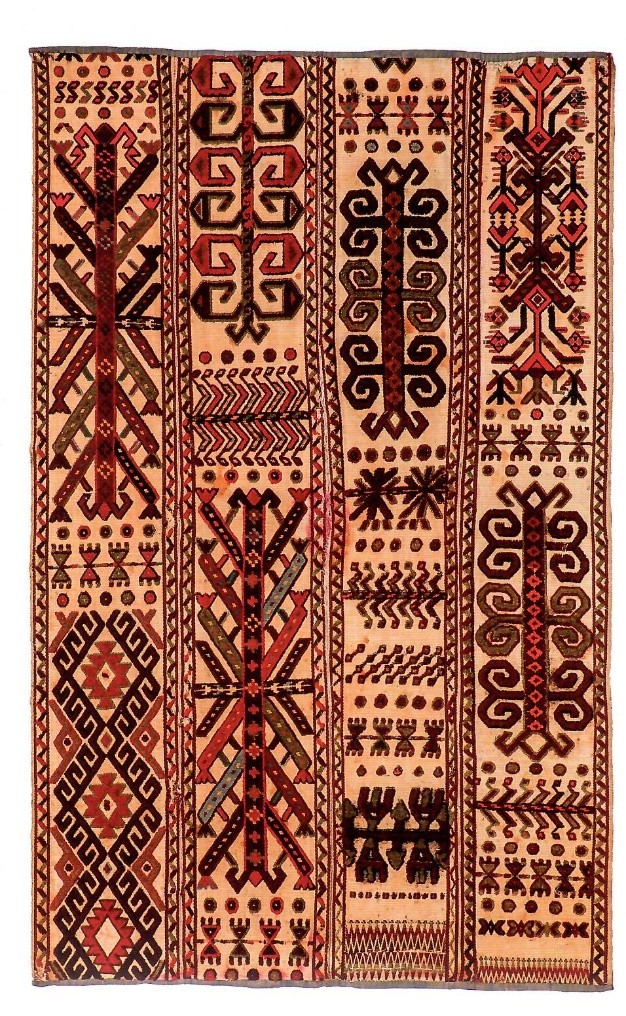
One of the most interesting variants of the tusalasha is an item woven from four strips of white baskur, created using a mixed technique. This combination of weaving techniques gives the surface of the carpet a varied texture and emphasises the graphic nature of the ornament.The composition alternates between wide and narrow strips, creating a clear rhythm and visual order. Against this backdrop unfolds a rich system of traditional patterns: omyrtqa, tumarsha, qanqa, taraq, qosmuyiz, synykmuyiz and others.The semantics of these motifs are deeply rooted in the traditional ornamental system, where omyrtqa (‘spine’) is a symbol of the axis of life, stability and the continuation of the family line; tumarsha is a protective amulet that safeguards the home and family; qanqa (‘skeleton, frame’) is an image of the foundation, internal structure and support; taraq (‘comb’) is a symbol of order, protection and the feminine principle; qosmuyiz (‘paired horn’) – one of the oldest zoomorphic symbols, associated with strength, abundance and prosperity; synyqmuyiz (‘broken horn’) – a variation on the horn motif, lending the ornament a sense of dynamism and complex plasticity.The white background of the baskur enhances the contrast of the patterns, whilst the composition demonstrates a harmonious blend of structural rigour and the decorative richness of Kazakh ornamentation.