Traditional and contemporary art of Kazakhstan

A Virtual Journey into the World of Kazakhstan’s Artistic Heritage

This Web Gallery presents the diversity of artistic practices in Kazakhstan, reflecting the continuity of cultural traditions and the dynamic development of contemporary creative processes. The virtual exhibition features works based on national images, symbols, and themes, as well as artworks by contemporary artists who reinterpret the country’s cultural heritage through contemporary artistic forms, expressive means, and modern technologies.

The selected works demonstrate the relationship between traditional and contemporary art, revealing the distinctive features of the national worldview, cultural identity, and cultural meanings. The presented materials allow viewers to trace how elements of historical and cultural heritage are reflected in contemporary artistic practice, while maintaining their significance and relevance in an increasingly globalized world.

The Web Gallery is aimed at promoting Kazakhstan’s artistic heritage, expanding public access to works of art, and fostering a lasting interest in national culture and art among a wide audience.

Hearth-sandal. 11th–12th centuries. Otrar.

Carving, stamping. 11th–12th centuries. Otyrar settlement
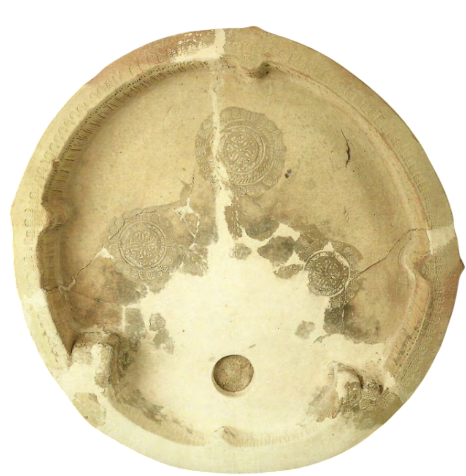
The sandal-hearth is one of the characteristic elements of the domestic culture of the medieval inhabitants of the Otrar settlement, associated with the system of heating and warming the dwelling. Such devices were used to retain heat and distribute it evenly throughout the room.The item is made of clay, decorated using carving and stamping techniques. The ornamentation applied to the surface of the hearth is predominantly geometric and rhythmically organised.The form of the sandal-hearth is typically characterised by its compactness and functional design. Such structures are widely known in the traditions of Central Asia and neighbouring regions.