
Saukele, 2024. Aluminium, copper, crystal, mixed media. Almaty
Aizhan Bekkulova, Dulat Ashimov
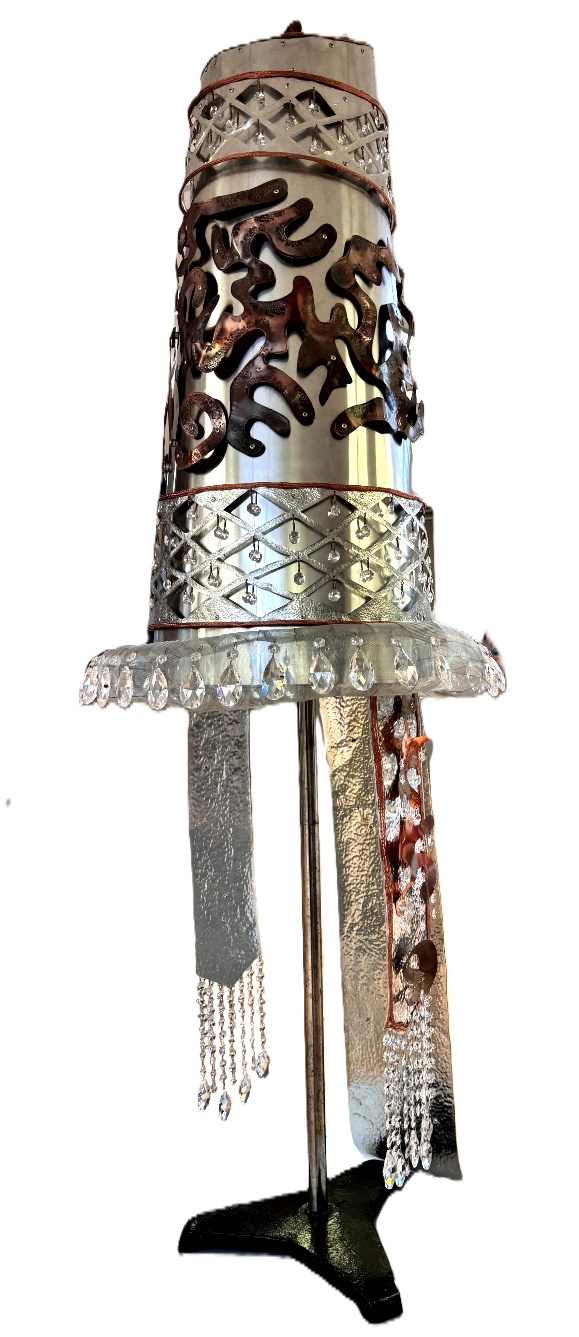
The work is a spatial-decorative composition in which a traditional element of the Kazakh wedding costume is reinterpreted through the means of contemporary sculpture. The sculpture is executed in mixed media using aluminium, copper and crystal, allowing industrial materials to blend with decorative refinement.The composition is structured vertically: the elongated form of the saukele forms a dominant axis around which ornamental and suspended elements are arranged. The lower section is complemented by movable parts, creating a sense of lightness and internal dynamism. This approach transforms the traditional object from the realm of costume into an independent work of art.The work’s visual language is based on the interplay between smooth metal surfaces and openwork decoration. The copper ornamental elements develop in form through free-flowing lines, evoking associations with plant motifs. Geometric bands and crystal pendants set the rhythm of the composition and allude to the traditional Saukele system of ornamentation.Light plays an important role in the perception of the work. Polished aluminium reflects the space and enhances the effect of the form’s fluidity, whilst copper lends the composition warmth and material density. The crystal elements introduce additional points of light and reinforce the object’s decorative quality.The authors present the image of the saukele not only as an element of national costume, but also as a symbol of cultural memory, transition and female status. In this contemporary interpretation, the traditional form takes on a universal significance, combining historical heritage with a contemporary artistic language.‘Saukele’ reflects a trend characteristic of contemporary Kazakhstani art towards the synthesis of decorative- -applied traditions and contemporary sculpture, where the ethno-cultural image becomes the basis for conceptual artistic expression.