Traditional and contemporary art of Kazakhstan

A Virtual Journey into the World of Kazakhstan’s Artistic Heritage

This Web Gallery presents the diversity of artistic practices in Kazakhstan, reflecting the continuity of cultural traditions and the dynamic development of contemporary creative processes. The virtual exhibition features works based on national images, symbols, and themes, as well as artworks by contemporary artists who reinterpret the country’s cultural heritage through contemporary artistic forms, expressive means, and modern technologies.

The selected works demonstrate the relationship between traditional and contemporary art, revealing the distinctive features of the national worldview, cultural identity, and cultural meanings. The presented materials allow viewers to trace how elements of historical and cultural heritage are reflected in contemporary artistic practice, while maintaining their significance and relevance in an increasingly globalized world.

The Web Gallery is aimed at promoting Kazakhstan’s artistic heritage, expanding public access to works of art, and fostering a lasting interest in national culture and art among a wide audience.

Mother of the World, 2001. Source: Kazakh Art, Volume 5. Almaty, 2013

Dilda Sarsekeeva
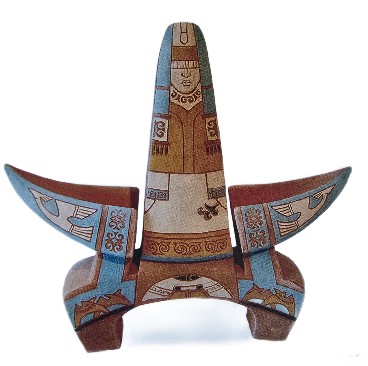
The composition of the work has a clearly defined tripartite structure. The central vertical element is an anthropomorphic figure wearing a tall headdress resembling a saukele, which alludes to the archetype of the Great Mother and the image of the foremother. The symmetrically arranged side elements, resembling wings, reinforce the mythological resonance of the composition and emphasise the protective and guardian function of the feminine principle.The work’s ornamental system is based on a combination of traditional Kazakh motifs and the artist’s own stylisation. Within the context of Turkic symbolism, these motifs are associated with the ideas of well-being, vitality, freedom and the mediating link between heaven and earth. Conceptually, the work ‘Mother of the World’ transcends the confines of a specific ethnic image and takes on a universal philosophical significance.