
‘Heroism’, 2011. Wood, metal.
Yergazy Isataev
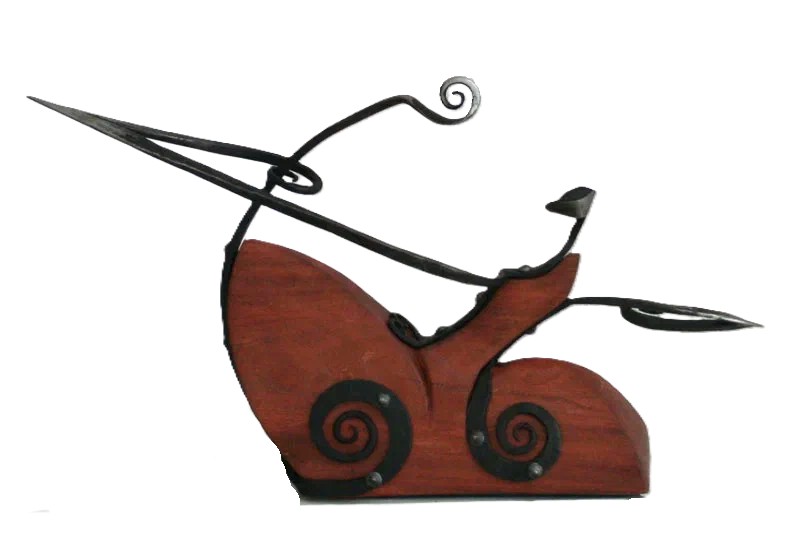
Dynamism and internal tension are the defining qualities of this decorative-sculptural composition, executed in a combination of wood and metal. The artistic image is built on the interplay between a massive wooden volume and graphically active metal elements, forming a complex spatial structure.The form of the wooden base is rendered in a generalised, almost biomorphic manner. The soft silhouette and fluidity of the lines evoke associations with a natural landscape or a stylised zoomorphic form, giving the composition an organic, ‘living’ character. Against this backdrop, the metal details are perceived as tense linear accents, cutting through the space and imparting a sense of movement to the entire work.The central image of the horseman is rendered with extreme conciseness and devoid of narrative detail. The artist, , deliberately avoids detailed rendering of the figure, transforming it into a symbolic sign. The drawn bow intensifies the emotional focus of the composition and creates a state of extreme inner tension, where it is not the moment of action itself that matters, but the energy preceding it.The decorative spiral motifs incorporated into the lower part of the object refer to traditional ornamental culture, yet are used sparingly and do not disrupt the integrity of the sculptural design. The contrast between the warm wood grain and the dark metal emphasises the clash between natural and constructed elements, creating an expressive material dialogue.The work’s thematic content is linked to the archetypal image of the nomadic warrior, widely present in the cultural memory of steppe civilisation. At the same time, the work does not aim for ethnographic reconstruction, but interprets the traditional image through the means of contemporary sculpture. The laconic form, the structural nature of the composition and the symbolic generalisation place the work within the realm of contemporary artistic expression, where the heroic element is revealed through the language of rhythm, tension and movement.