
Brief Encyclopedia Signs and symbols of Kazakh culture
Cave
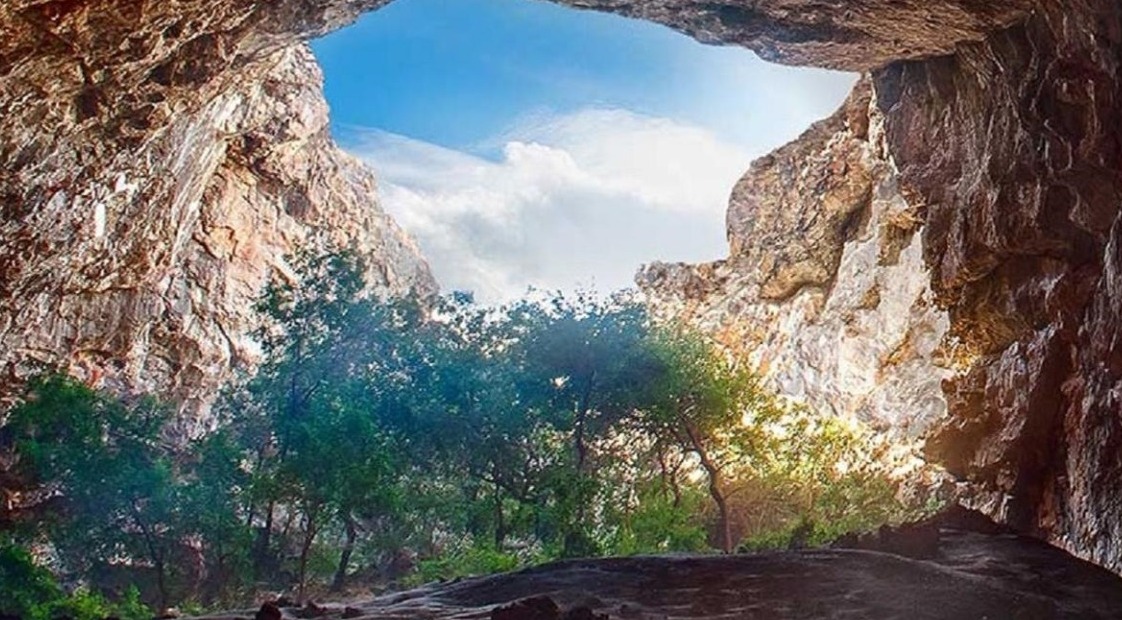
1 сурет.
In world culture, the cave is often understood as a symbol of the womb of Mother Earth and is therefore closely associated with the feminine principle. For example, in Chinese thought, the cave corresponds to yin (the feminine principle), while the mountain corresponds to yang (the masculine principle). According to ancient beliefs, the cave is a place where new life originates and also an entrance to the world of the dead, where a person goes after death. In many cases, caves were sites of initiation and consecration rituals: a person would enter as if into another world and emerge in a completely different status, renewed. In such rites, the cave was perceived as a place of mystical initiation, where the neophyte, forgetting their former life, was symbolically “reborn” from the maternal womb and acquired a new spiritual state.
According to Turkic mythology, the goddess Umay preserves the souls of unborn children in caves. A genealogical legend also tells that it was in a cave that the nine sons of Ashina—the progenitor of Turkic peoples—were born to the Wolf Mother (Böri-ana). The Buryats still believe that caves can grant children to infertile women, and in the Khori Buryat language, the word umay refers to the reproductive organ, the womb. Here, the symbolism of the cave as a maternal womb is especially evident.
The tradition of venerating caves has also been preserved among the Kazakhs. Examples include the Shakpak-ata caves in southern and western Kazakhstan, the Konyr-Aulie cave in eastern Kazakhstan, and other sacred sites. To this day, women visit these places to pray for relief from infertility, while people in general seek healing and spiritual support.
ШайгОзова Ж.Н., Наурзбаева А. Б.
Краткая энциклопедия знаков и символов казахской культуры.
Алматы: КазНИИК, 2023.