
The Karavansaray Turkistan tourist complex in Turkestan. From open sources
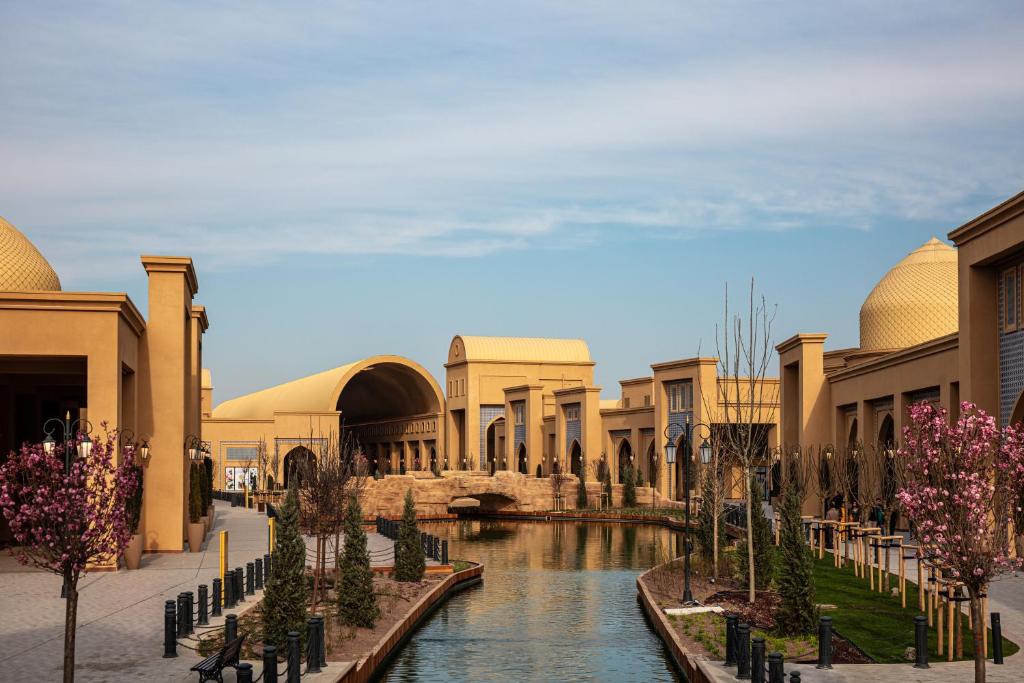
Karavansaray Turkistan (2021, Turkestan) is a large, multifunctional tourist complex designed as a ‘city within a city’ and interpreting the image of the Great Silk Road and an Eastern caravanserai.The architectural concept is based on a stylised interpretation of the traditional Central Asian urban environment: a system of streets, courtyards, arches and canals creates the atmosphere of a historic settlement. The central element is a water canal with promenades and entertainment programmes, which transforms the space into a theatrical setting.From a semiotic perspective, the complex serves as a symbol of Turkestan’s revival as the spiritual capital of the Turkic world and a symbol of Kazakhstan’s new tourism economy, uniting history, religion, the economy and leisure into a single cultural model. It conveys the idea of the Great Silk Road as a space for the exchange of cultures and civilisations.In iconographic terms, it draws on imagery of an oriental oasis city, a caravan route, a water canal as a ‘lifeline’, and dramatised folk legends (including staged shows based on Kazakh folklore). The architecture creates the effect of a ‘fairytale Orient’, where historical motifs are stylised into a museum-and-tourism format.