Traditional and contemporary art of Kazakhstan

A Virtual Journey into the World of Kazakhstan’s Artistic Heritage

This Web Gallery presents the diversity of artistic practices in Kazakhstan, reflecting the continuity of cultural traditions and the dynamic development of contemporary creative processes. The virtual exhibition features works based on national images, symbols, and themes, as well as artworks by contemporary artists who reinterpret the country’s cultural heritage through contemporary artistic forms, expressive means, and modern technologies.

The selected works demonstrate the relationship between traditional and contemporary art, revealing the distinctive features of the national worldview, cultural identity, and cultural meanings. The presented materials allow viewers to trace how elements of historical and cultural heritage are reflected in contemporary artistic practice, while maintaining their significance and relevance in an increasingly globalized world.

The Web Gallery is aimed at promoting Kazakhstan’s artistic heritage, expanding public access to works of art, and fostering a lasting interest in national culture and art among a wide audience.

Kokbori, 2023. Carpet, spray paint

Sabyrzhanqyzy Asel (artistic pseudonym Assol)
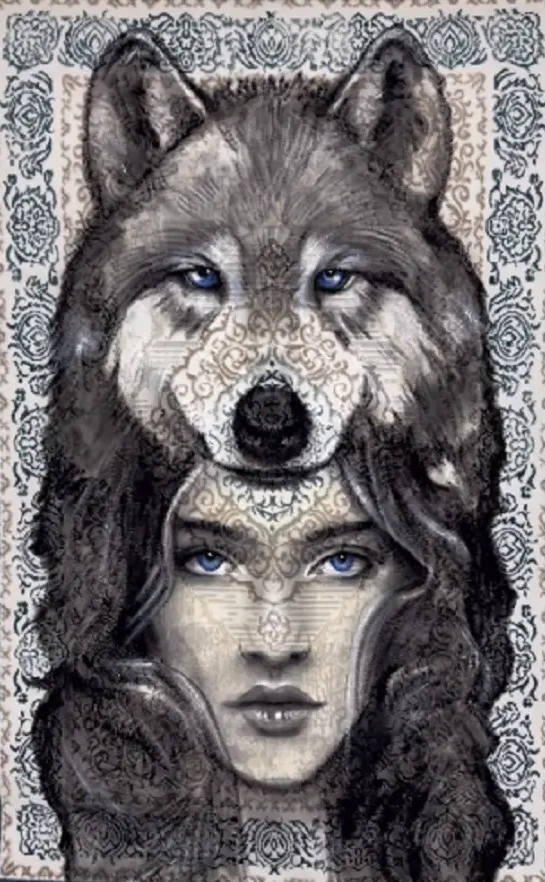
The work offers a contemporary interpretation of national identity through a fusion of the carpet and street art aesthetics. The artist uses the carpet as the basis for her composition, transforming it into a space for artistic expression. The use of spray paint over the carpet’s ornamentation lends the work particular expressiveness. The contrast between the carpet’s handcrafted texture and the gesture of graffiti symbolises a dialogue between past and present, tradition and contemporary urban culture. The artist demonstrates that national heritage is not static, but capable of transforming and existing within a contemporary artistic language.The central figure of the work is a girl in the form of a celestial she-wolf — Kokbori. In Turkic mythology, the she-wolf is the sacred progenitor of the Turkic peoples, a symbol of ancestral lineage, strength and spiritual protection.