
Kobyz player. 2023–2024. Mixed media (hand-engraved, metal, relief). Source:https://businessfm.kz
Amandos Akanaev
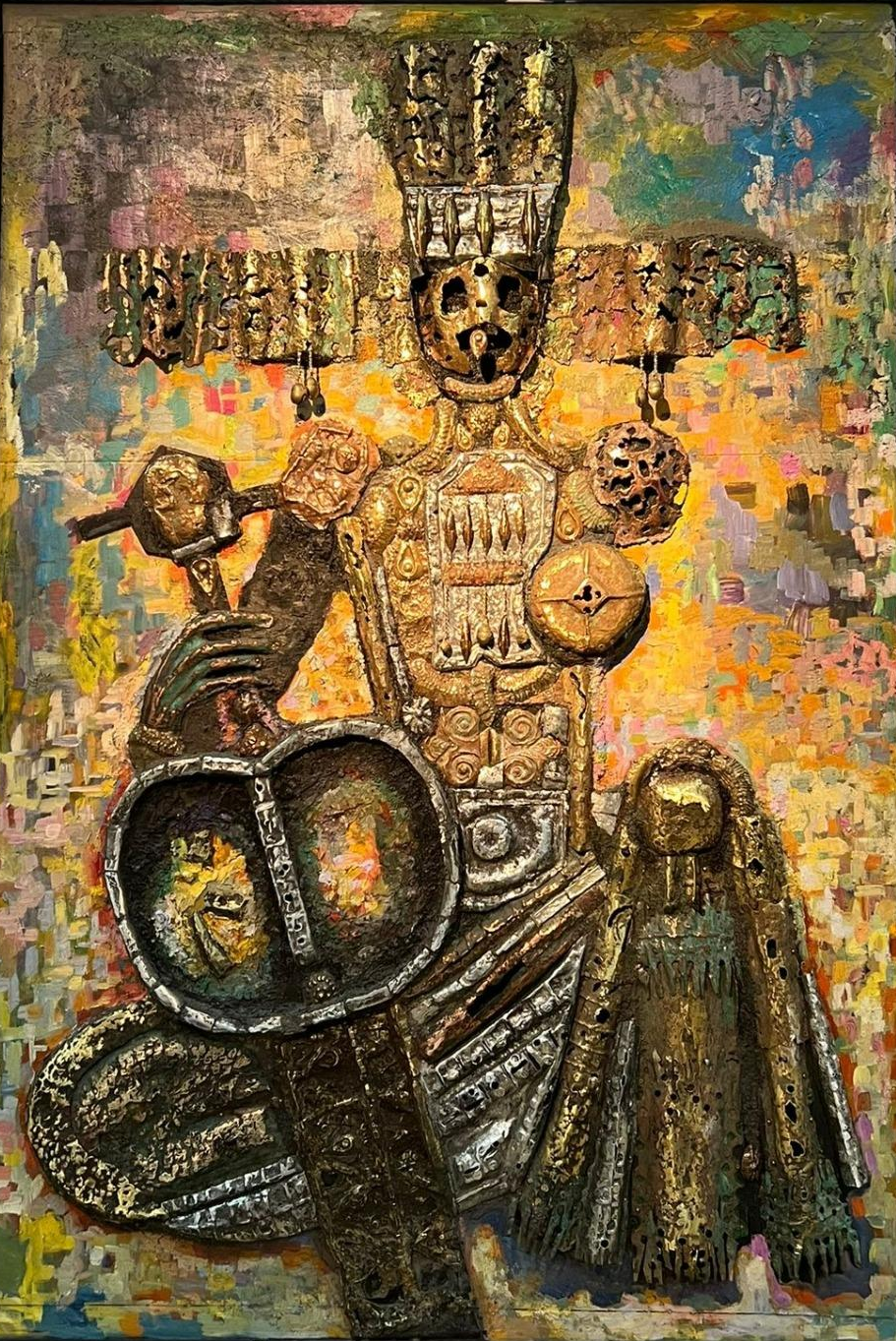
From the perspective of visual semiotics, the work constitutes a complex system of signs in which iconic, symbolic and indexical codes interact, forming a multi-layered structure of meaning.The central figure of the kobyz player functions as a dominant visual icon, possessing a high degree of representativeness whilst simultaneously being sacralised through the materiality of the metal and the technique of relief embossing. The symbolic level is manifested through the attributes and costume, which encode the figure as a mediator of the sacred space. Elements referring to archaic ritual forms and the shamanic tradition of the baksy function as cultural codes, interpreted within the framework of the mythological semiosphere. In this context, the kobyz serves not only as a musical instrument but also as a symbolic object representing the connection between the material and spiritual worlds. At the level of compositional semiotics, the instrument occupies the position of a semantic centre, organising the visual and semantic hierarchy of the image. The pictorial background, constructed in an impressionistic manner, functions as a field of indexical signs capturing movement, vibration and processuality. The brushstroke structure and colour transitions create the effect of visualising the invisible—sound waves or energy flows—which expands the perceptual boundaries of the image.