
The ‘Kazakhstan’ Hotel in Almaty. From open sources
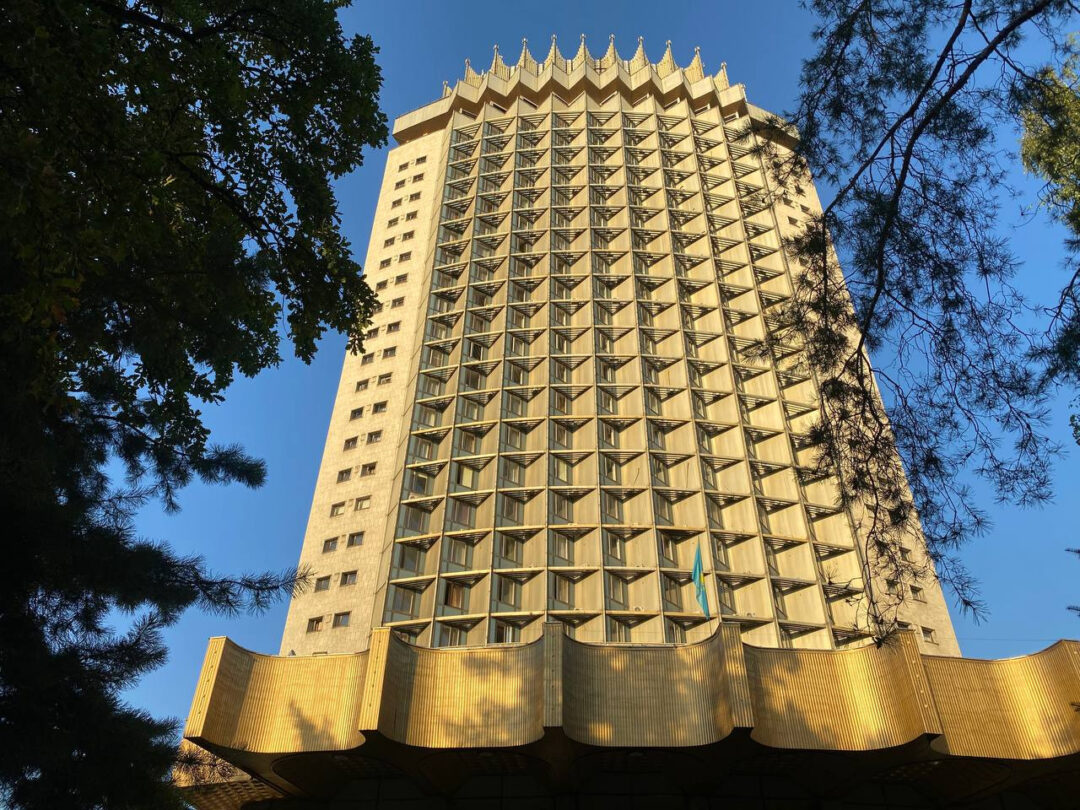
The ‘Kazakhstan’ Hotel (1975–1977) is one of the most significant examples of Soviet modernist architecture in Kazakhstan and one of Almaty’s main landmarks. The project was designed by architects Y. G. Ratushny, L. L. Ukobotov and A. K. Deev (according to some sources, A. Anchugov and V. Kashtanov), and structural engineer L. N. Matviets. The hotel building can be seen as a symbol of modernisation and economic development in Soviet Kazakhstan. In the 1970s, high-rise construction was a symbol of scientific and technological progress, industrial potential and urban modernisation. The building’s verticality visually marked the city centre, becoming a distinctive symbol of Almaty’s status as the capital and the republic’s largest cultural and administrative centre. The hotel’s architectural image is characterised by its ambiguity. Its slender tower can be interpreted as a modern symbol of a forward-looking outlook and technical progress, whilst the crowning ‘crown’ evokes associations with the sun’s rays and the mountain peaks of the Zailiyskiy Alatau. The golden colour of the finial reinforces the symbolism of light, success and prosperity. Researchers also note that the pleated pattern of the façades resembles the vertical folds of a traditional felt yurt covering or the contours of mountain slopes, thereby lending the modernist architecture a regional artistic character without directly employing national ornamentation.