
Archetypes, 2020. Mixed media
Alibay Bapanov
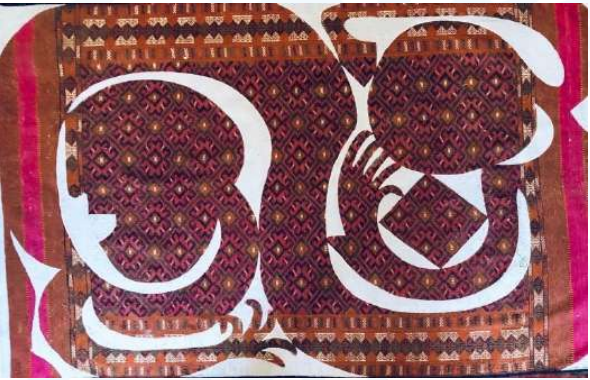
From a semiotic perspective, the composition ‘Archetypes’ (2020) represents a multi-layered system of signs, based on the combination of a traditional Kazakh carpet and universal mythological images. The carpet, woven using the orama technique, serves not only as a material foundation but also as a cultural text that preserves the collective memory and symbolism of traditional art.The S-shaped composition functions as a sign of the infinity and cyclical nature of existence. The serpentine androgynous image refers to ancient mythological archetypes associated with the idea of the unity of opposites, chaos and the cosmic principle. In the context of C. Jung’s analytical psychology, the figure can be interpreted as an archetype of wholeness, uniting the masculine and feminine principles.The symbol of the rhombus — sharshy — takes on particular significance; in the Kazakh ornamental tradition, it is associated with fertility, the earth, and the union of the masculine and feminine. Thus, the ornament here functions as a semiotic code conveying ideas of harmony, birth, and the continuity of life.The effect of silhouettes, reminiscent of paper cut-outs and stencils for syrmaks, reinforces the work’s connection with folk decorative art. As a result, the work becomes a visual text in which themes of duality, memory and the unity of the world are revealed through archetypal symbols.