Traditional and contemporary art of Kazakhstan

A Virtual Journey into the World of Kazakhstan’s Artistic Heritage

This Web Gallery presents the diversity of artistic practices in Kazakhstan, reflecting the continuity of cultural traditions and the dynamic development of contemporary creative processes. The virtual exhibition features works based on national images, symbols, and themes, as well as artworks by contemporary artists who reinterpret the country’s cultural heritage through contemporary artistic forms, expressive means, and modern technologies.

The selected works demonstrate the relationship between traditional and contemporary art, revealing the distinctive features of the national worldview, cultural identity, and cultural meanings. The presented materials allow viewers to trace how elements of historical and cultural heritage are reflected in contemporary artistic practice, while maintaining their significance and relevance in an increasingly globalized world.

The Web Gallery is aimed at promoting Kazakhstan’s artistic heritage, expanding public access to works of art, and fostering a lasting interest in national culture and art among a wide audience.

Sogym, 2016. Canvas, acrylic, mixed media

Agyn Bapanov
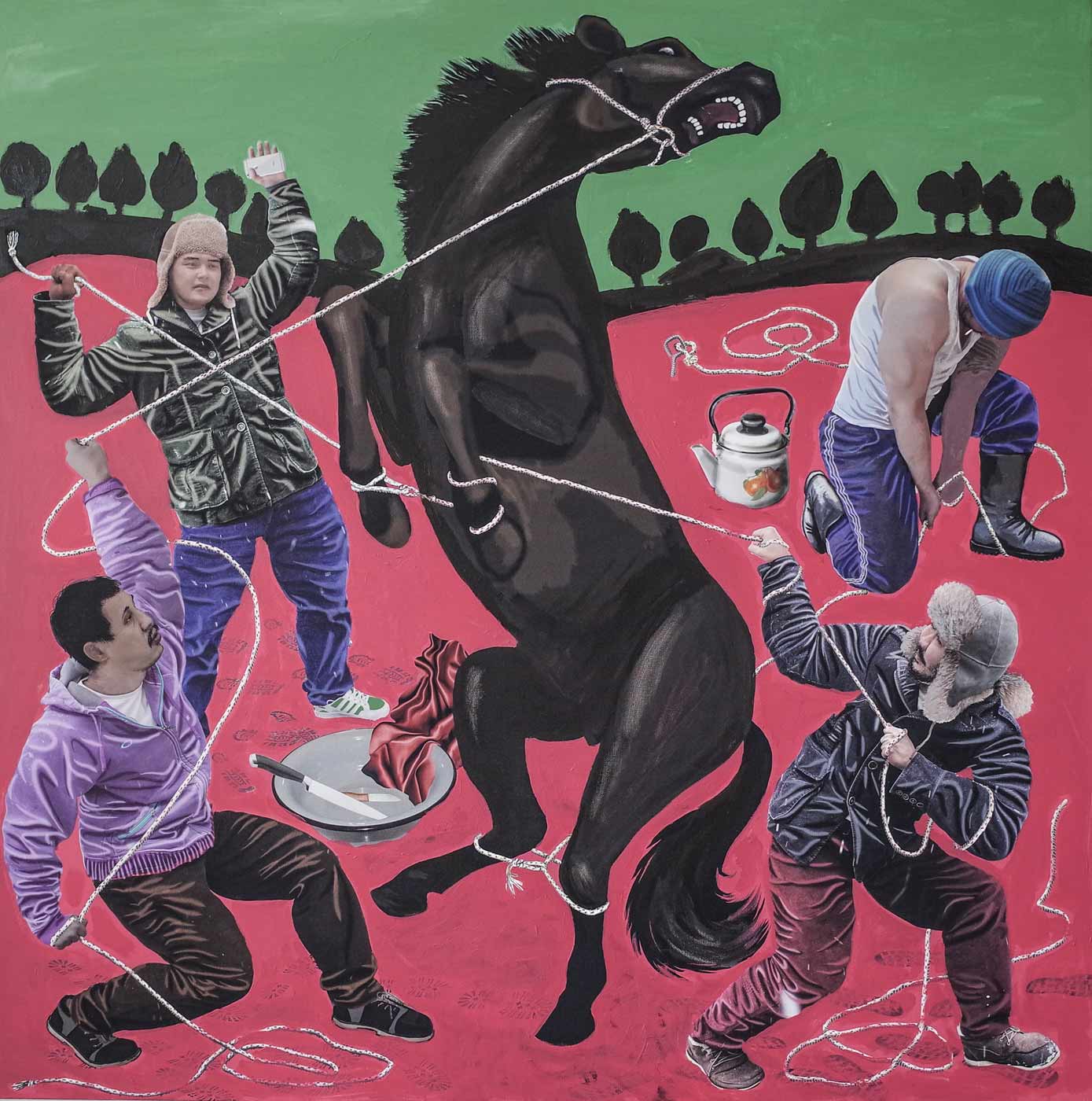
Agyn Bapanov’s work ‘Sogym’ presents a semiotically rich interpretation of a traditional Kazakh ritual, in which an everyday scene is transformed into a multi-layered system of cultural signs. The central image of the black horse functions as an archetypal symbol of natural power, freedom and nomadic identity, whilst the network of ropes becomes a sign of social control and collective memory. The contrast between the archaic ritual and the modern appearance of the characters emphasises the process of adapting tradition within an urbanised culture. The expressive colouring, the flatness of the space and elements of mixed media shift the scene from the realm of realistic narrative into the realm of symbolic expression. What is depicted here is not merely a domestic activity, but an important social ritual that brings together relatives and neighbours. However, Bapanov moves away from domestic realism, transforming the scene into a dramatic, almost mythological spectacle.