
Khan Shatyr in Astana. From open sources
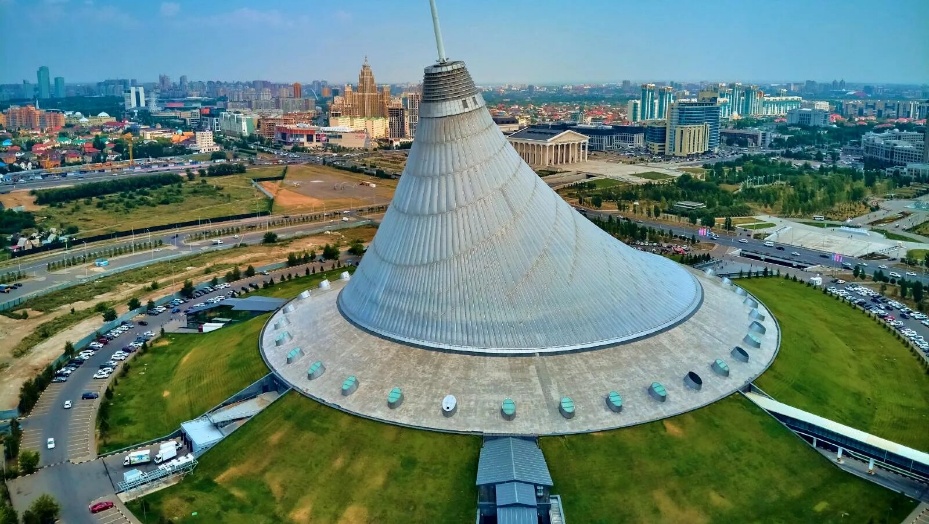
The ‘Khan Shatyr’ shopping and entertainment centre is one of the most famous examples of contemporary world architecture and one of the main symbols of the new Astana. The structure was built between 2006 and 2010 to a design by the British architect Norman Foster. From an art-historical perspective, ‘Khan Shatyr’ is an outstanding example of high-tech architecture, in which engineering technologies become the primary artistic means of expression. However, unlike most structures in this style, which focus exclusively on demonstrating technical capabilities, the complex’s architecture is based on a synthesis of innovative structures and cultural symbolism. A high-tech system of supporting cables and a transparent membrane evokes the image of a traditional Eastern tent, thereby transforming the engineering structure into an artistic metaphor. The architectural composition is characterised by exceptional simplicity. The entire spatial structure is organised around a single dominant vertical element — an inclined steel mast, from which a network of cables radiates outwards to support the transparent membrane. This design creates an impression of lightness and dynamic equilibrium, despite the structure’s colossal dimensions.