
The ‘Kazakhstan’ Central Concert Hall. From open sources
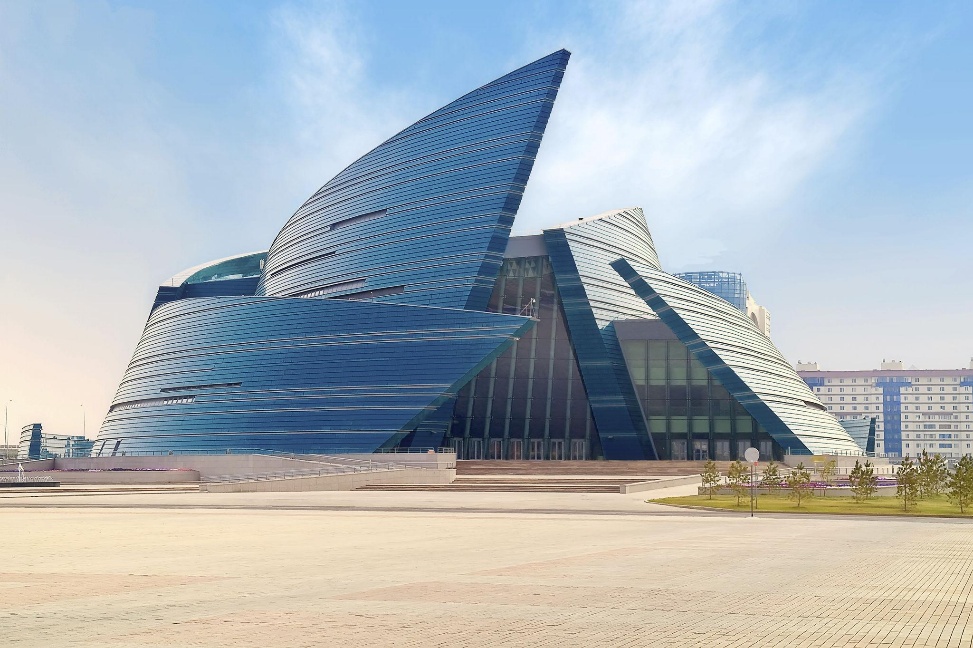
The ‘Kazakhstan’ Central Concert Hall (Astana, architect Manfredo Nicoletti, 2009) is a major example of biomorphic architecture, designed in the form of a blossoming flower, where Kazakhstan’s national character is expressed through the metaphor of the steppe’s natural landscape; the building’s composition is based on the idea of ‘blooming’ as a symbol of the cultural growth and flourishing of the independent state, and is also associated with the steppe tulip.From a semiotic perspective, the building functions as a symbol of modernisation and cultural representation for the capital: it conveys the idea of openness, creative energy and Kazakhstan’s integration into the global cultural sphere, whilst simultaneously cementing Astana’s image as the centre of a new national identity. The biomorphic form becomes a universal symbol of ‘living culture’, where architecture is interpreted as a process of development rather than merely a static object.In iconographic terms, the central motifs are the flower (as a symbol of blossoming and renewal), the steppe wind (as a metaphor for movement and freedom) and musicality (the building is perceived as a ‘frozen melody’ thanks to the sculptural form of its shell and its internal acoustic design). Thus, ‘Kazakhstan’ combines natural archetypes, musical and cultural associations and the idea of state modernisation, forming one of the most expressive examples of biomorphic architecture in contemporary Astana.