
Brief Encyclopedia Signs and symbols of Kazakh culture
Rainbow
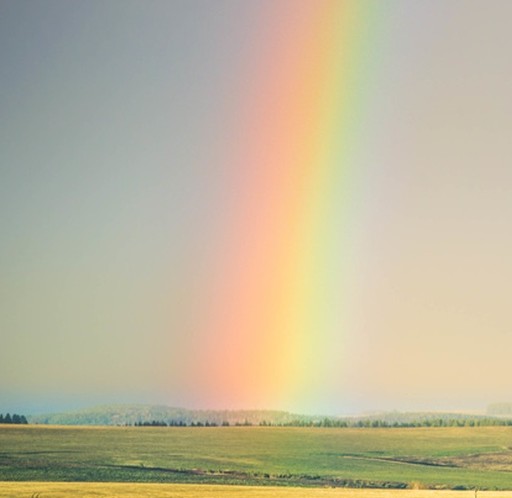
The rainbow is the embodiment of all the colours of life. In many cultures of the world, the rainbow is a bridge between heaven and earth, a sign of God’s infinite mercy and love for mankind. In Kazakh culture the rainbow is called «kempirqosaq». Ch. Valikhanov connects its etymology with the mythological idea that after the rain the group of sheep and goats – «qosaq» – is milked by the heavenly deity in the form of an old woman – «kempir». Ancient Turks believed that through rainbow to the people rising from the sky Great Mother Goddess – Umay ana. And it was the belt of the universe (Turkmen – alem koshar), Azerbaijan and Turks called the heavenly belt, and in Kumik language – Tengir Jaya, in translation «the bow of Tengri». In the symbolic representations of ancient cultures, the wind is a manifestation of the supernatural, and various functions are attributed to it. In some cultures it is depicted in association with certain deities. In ancient Greece, for example, the north wind Borey was depicted with legs in the shape of a snake and sometimes with winged feet. The ancient Chinese worshipped the wind (feng) as a bird god, and they call the particular «science» of harmonizing the surrounding space «feng shui» (wind-water). Some Turkic peoples, e.g. Karachai and Balkar, had a belief in gods in which the father of winds was considered
ШайгОзова Ж.Н., Наурзбаева А. Б.
Краткая энциклопедия знаков и символов казахской культуры.
Алматы: КазНИИК, 2023.