
Brief Encyclopedia Signs and symbols of Kazakh culture
Signs and symbols of Kazakh art
The yurt as a semiotic space
The language of Kazakh ornamentation
- "Döngelek" (solar circle)
- "Kün közi" (eye of the sun)
- "Törtqulaq" (cross)
- "Shimai" (spiral)
- "Aishyk gül" (crescent)
- "Zhuldyz" (star)
- "Kempirqosaq" (rainbow)
- "Sharshy" (square)
- "Tumarsha" (amulet, often triangular)
- "Baldaq" (support, crutch)
- "Irek" (zigzag)
- "Törtüshkül" (four sharp corners)
- "Qarmaq" (fishing hook)
- "Shynzhyra" (chain)
- "Syñar müiiz" (single horn)
- "Qarga tuiaq" (crow's foot)
- "Asha tuiaq" (cloven hoof)
- "Qaz moiyn" (goose / swan neck)
- "It quiryq" (dog's tail)
- "Botaköz" (camel calf's eye)
- "Böri qulaq" (wolf's ears)
- "Alaqurt" (speckled spider)
- "Zhylan" (snake)
- "Agash gül" (tree-flower)
- "Örken" (stem)
- "Raikhangül" (rose)
- "Arpabas" (barley head)
Traditional costume in the context of semiotics
The symbolic artistry of Kazakh jewelry
Color as a semiotic code
The symbolic content of materials (handicrafts, applied arts)
The symbolic nature of Kazakh music
Breast ornaments / öñirzhiek
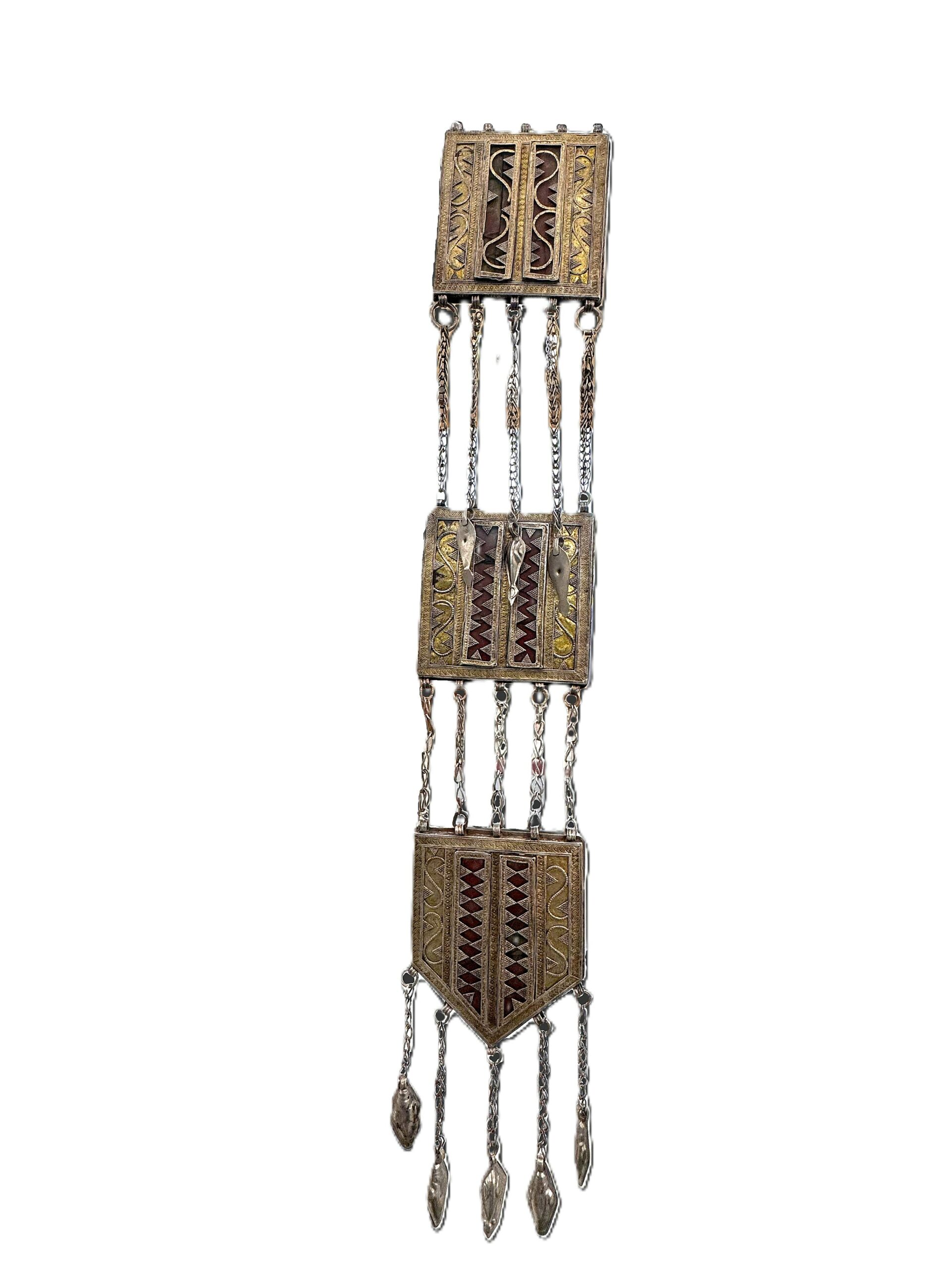
“Öñirzhiek” breast ornament was used exclusively in Western Kazakhstan. This product is usually three hollow rectangular plates, vertically attached to each other by chains with pendants of various shapes. The plates were filled with white paste for weighting. The main symbolic function of such stepped jewellery is probably to protect the chest/body of a girl from the influence of «evil forces». Obviously, this jewellery is a projection of the tripartite vertical, and its rectangular shapes symbolise the horizontal model of the world. Each structural element of the piece, including the diamond-shaped pendants and bells, has a magical meaning. The object itself was considered an obligatory attribute of a nursing woman. The word Öñirzhiek, which is composed of two words: Öñir (area, region, side) and zhiek (edge). It thus points to the symbolic meaning of the ornament – a special protective status of the breast of a nursing mother. A similar form of stepped breast ornament exists among the Mongols, Turkmen and other peoples, who use it to «protect» vital areas of the body of women of childbearing age.
ШайгОзова Ж.Н., Наурзбаева А. Б.
Краткая энциклопедия знаков и символов казахской культуры.
Алматы: КазНИИК, 2023.