
Brief Encyclopedia Signs and symbols of Kazakh culture
Назад к разделу
Signs and symbols of Kazakh art
The yurt as a semiotic space
The language of Kazakh ornamentation
- "Döngelek" (solar circle)
- "Kün közi" (eye of the sun)
- "Törtqulaq" (cross)
- "Shimai" (spiral)
- "Aishyk gül" (crescent)
- "Zhuldyz" (star)
- "Kempirqosaq" (rainbow)
- "Sharshy" (square)
- "Tumarsha" (amulet, often triangular)
- "Baldaq" (support, crutch)
- "Irek" (zigzag)
- "Törtüshkül" (four sharp corners)
- "Qarmaq" (fishing hook)
- "Shynzhyra" (chain)
- "Syñar müiiz" (single horn)
- "Qarga tuiaq" (crow's foot)
- "Asha tuiaq" (cloven hoof)
- "Qaz moiyn" (goose / swan neck)
- "It quiryq" (dog's tail)
- "Botaköz" (camel calf's eye)
- "Böri qulaq" (wolf's ears)
- "Alaqurt" (speckled spider)
- "Zhylan" (snake)
- "Agash gül" (tree-flower)
- "Örken" (stem)
- "Raikhangül" (rose)
- "Arpabas" (barley head)
Traditional costume in the context of semiotics
The symbolic artistry of Kazakh jewelry
Color as a semiotic code
The symbolic content of materials (handicrafts, applied arts)
The symbolic nature of Kazakh music
Tumar
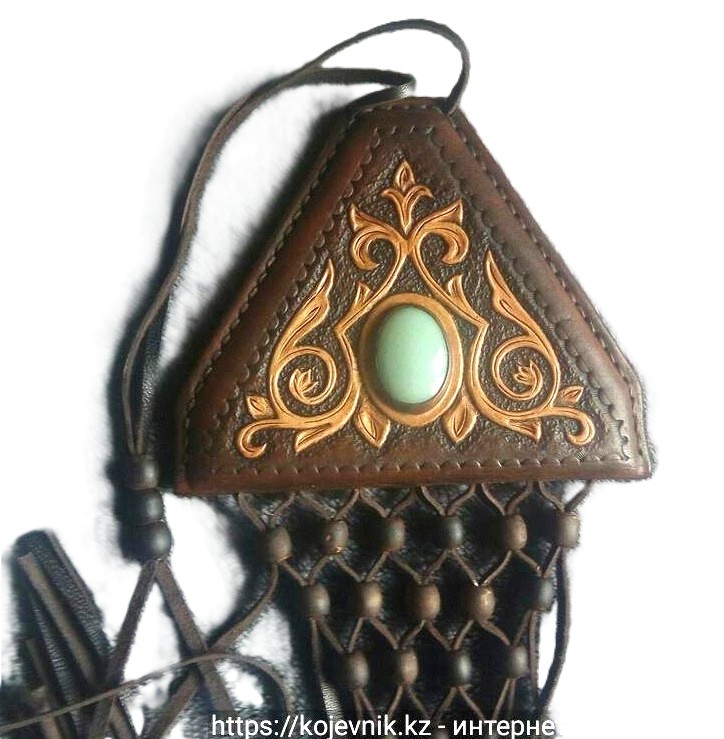
The shape of Turkic metal tūmars is different: cylindrical, triangular and rectangular. They were worn on the chest by children and young girls. They were considered the strongest protection against «evil» forces. With the advent of Islam, inscriptions from the Koran were written on them. Inside the amulet were used magical herbs, salt, etc., which people believed strengthened their protective function. The most popular amulet is a triangular tumar (pointing upwards), which symbolises the world mountain. ства
ШайгОзова Ж.Н., Наурзбаева А. Б.
Краткая энциклопедия знаков и символов казахской культуры.
Алматы: КазНИИК, 2023.