
Brief Encyclopedia Signs and symbols of Kazakh culture
Signs and symbols of Kazakh art
The yurt as a semiotic space
The language of Kazakh ornamentation
- "Döngelek" (solar circle)
- "Kün közi" (eye of the sun)
- "Törtqulaq" (cross)
- "Shimai" (spiral)
- "Aishyk gül" (crescent)
- "Zhuldyz" (star)
- "Kempirqosaq" (rainbow)
- "Sharshy" (square)
- "Tumarsha" (amulet, often triangular)
- "Baldaq" (support, crutch)
- "Irek" (zigzag)
- "Törtüshkül" (four sharp corners)
- "Qarmaq" (fishing hook)
- "Shynzhyra" (chain)
- "Syñar müiiz" (single horn)
- "Qarga tuiaq" (crow's foot)
- "Asha tuiaq" (cloven hoof)
- "Qaz moiyn" (goose / swan neck)
- "It quiryq" (dog's tail)
- "Botaköz" (camel calf's eye)
- "Böri qulaq" (wolf's ears)
- "Alaqurt" (speckled spider)
- "Zhylan" (snake)
- "Agash gül" (tree-flower)
- "Örken" (stem)
- "Raikhangül" (rose)
- "Arpabas" (barley head)
Traditional costume in the context of semiotics
The symbolic artistry of Kazakh jewelry
Color as a semiotic code
The symbolic content of materials (handicrafts, applied arts)
The symbolic nature of Kazakh music
Qara öleñ
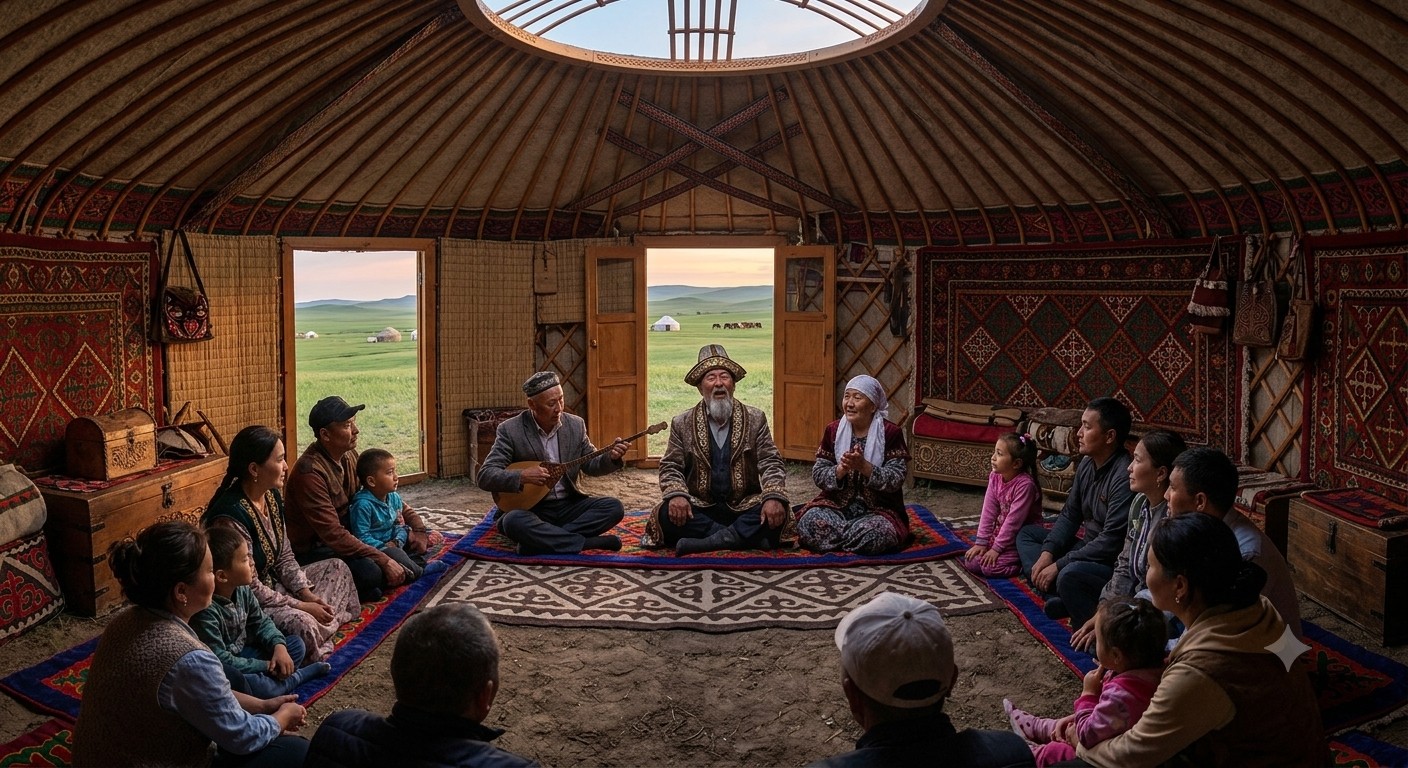
The qara öleñ (folk song) is characterised by its colour symbolism. The word «qara» speaks of antiquity and sacrality and its universal meaning. Experts consider folk song as a system of symbols and codes that manifests itself on three levels: verbal (poetic text), kinesthetic (facial expressions, gestures, posture) and musical (musical language). Like any other folklore genre, folk song, in this case qara öleñ, has a hidden symbolism. This is expressed not only through the use of traditional poetic imagesand symbols of Kazakh culture (birds, animals, natural phenomena, etc.). – This is expressed not only in the use of traditional poetic symbols of Kazakh culture (birds, animals, natural phenomena, etc. – «zhūldyz öleñ», «tau öleñ», «qamshy öleñ», «shäi öleñ», etc.), but also in the structure of the song and in the practise of performance. There are a number of characteristic features of qara öleñ: firstly, universality (performed by men and women, that is, without gender and age restrictions) and in all circumstances (of course, positive) – family gatherings, folk festivals, etc.
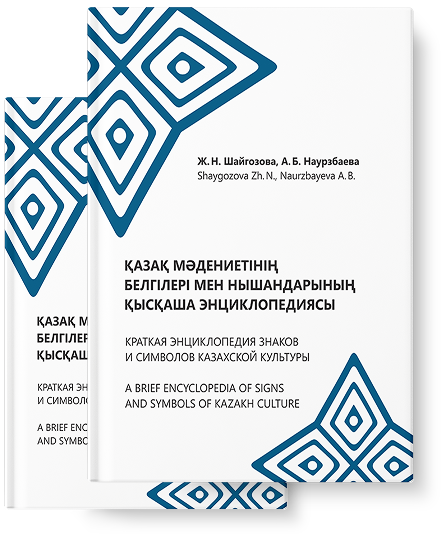
ШайгОзова Ж.Н., Наурзбаева А. Б.
Краткая энциклопедия знаков и символов казахской культуры.
Алматы: КазНИИК, 2023.