
Brief Encyclopedia Signs and symbols of Kazakh culture
Signs and symbols of Kazakh art
The yurt as a semiotic space
The language of Kazakh ornamentation
- "Döngelek" (solar circle)
- "Kün közi" (eye of the sun)
- "Törtqulaq" (cross)
- "Shimai" (spiral)
- "Aishyk gül" (crescent)
- "Zhuldyz" (star)
- "Kempirqosaq" (rainbow)
- "Sharshy" (square)
- "Tumarsha" (amulet, often triangular)
- "Baldaq" (support, crutch)
- "Irek" (zigzag)
- "Törtüshkül" (four sharp corners)
- "Qarmaq" (fishing hook)
- "Shynzhyra" (chain)
- "Syñar müiiz" (single horn)
- "Qarga tuiaq" (crow's foot)
- "Asha tuiaq" (cloven hoof)
- "Qaz moiyn" (goose / swan neck)
- "It quiryq" (dog's tail)
- "Botaköz" (camel calf's eye)
- "Böri qulaq" (wolf's ears)
- "Alaqurt" (speckled spider)
- "Zhylan" (snake)
- "Agash gül" (tree-flower)
- "Örken" (stem)
- "Raikhangül" (rose)
- "Arpabas" (barley head)
Traditional costume in the context of semiotics
The symbolic artistry of Kazakh jewelry
Color as a semiotic code
The symbolic content of materials (handicrafts, applied arts)
The symbolic nature of Kazakh music
Etek (hem and skirts of clothing)
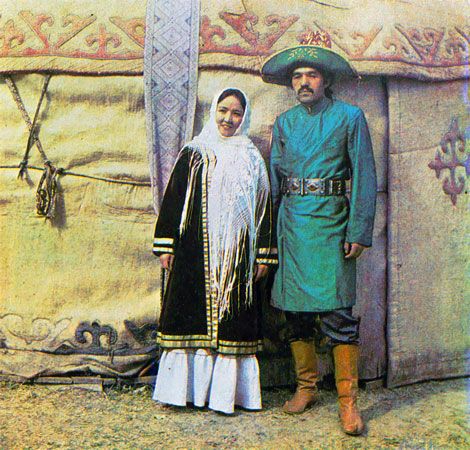
The sacral status in the traditional culture of Kazakhs was occupied by the hem (etek) and skirt of the dress, which were actively involved in some rituals and ceremonies. For example, a childless woman fed a dog with the hem of her dress; a part of the hem was not hemmed for a woman who was not pregnant for a long time, the hem of the dress was used to remove the evil eye from the child by wiping his face, etc. According to Kazakh belief, the hem belongs to the underworld, so the midwife accepts the baby and extends the invitation to this world and blessing: the baby was considered a being from the underworld until the 40th day. The embroidery decorating the hem of a girl’s dress is popular in many cultures around the world. In traditional society, it was believed that «evil spirits» could enter the open areas – especially through the hem – and cause great harm to the girl. Dresses with embroidered hems were usually worn before the birth of the first child. The purpose of decorating the hem of the dress was to protect the «weak», vulnerable area.
ШайгОзова Ж.Н., Наурзбаева А. Б.
Краткая энциклопедия знаков и символов казахской культуры.
Алматы: КазНИИК, 2023.