
Brief Encyclopedia Signs and symbols of Kazakh culture
Signs and symbols of Kazakh art
The yurt as a semiotic space
The language of Kazakh ornamentation
- "Döngelek" (solar circle)
- "Kün közi" (eye of the sun)
- "Törtqulaq" (cross)
- "Shimai" (spiral)
- "Aishyk gül" (crescent)
- "Zhuldyz" (star)
- "Kempirqosaq" (rainbow)
- "Sharshy" (square)
- "Tumarsha" (amulet, often triangular)
- "Baldaq" (support, crutch)
- "Irek" (zigzag)
- "Törtüshkül" (four sharp corners)
- "Qarmaq" (fishing hook)
- "Shynzhyra" (chain)
- "Syñar müiiz" (single horn)
- "Qarga tuiaq" (crow's foot)
- "Asha tuiaq" (cloven hoof)
- "Qaz moiyn" (goose / swan neck)
- "It quiryq" (dog's tail)
- "Botaköz" (camel calf's eye)
- "Böri qulaq" (wolf's ears)
- "Alaqurt" (speckled spider)
- "Zhylan" (snake)
- "Agash gül" (tree-flower)
- "Örken" (stem)
- "Raikhangül" (rose)
- "Arpabas" (barley head)
Traditional costume in the context of semiotics
The symbolic artistry of Kazakh jewelry
Color as a semiotic code
The symbolic content of materials (handicrafts, applied arts)
The symbolic nature of Kazakh music
Shalbar / trousers
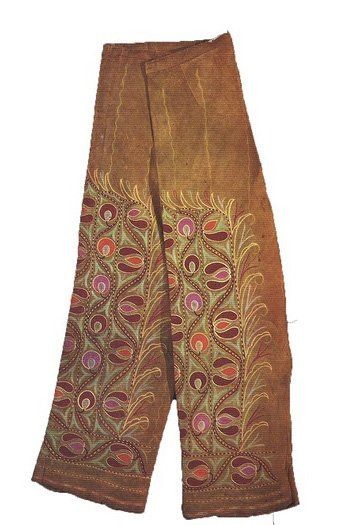
Another type of clothing with which the Kazakhs associated the term «üydin kūty» was the shalbar (pants), especially the underwear, which could serve as the first diaper for a grandchild and remained in the family after the death of the owner. The reason for the sacralization of the garment was its direct contact with the human body and human energy, i.e. it originally had the meaning of a talisman with increasing connection to the meaning of male strength, potency, etc. (loincloth), which is reflected in the decoration of traditional Kazakh turbans made of leather (suede), which were usually worn on ceremonial occasions. They were covered with multicolored tambour embroidery, the composition of which contained the ideas of wishes for good luck, prosperity, fertility and so on.
ШайгОзова Ж.Н., Наурзбаева А. Б.
Краткая энциклопедия знаков и символов казахской культуры.
Алматы: КазНИИК, 2023.